Interview: Jackbox's Allard Laban talks how Jackbox adopted mobile and what Party Pack 12 has in store
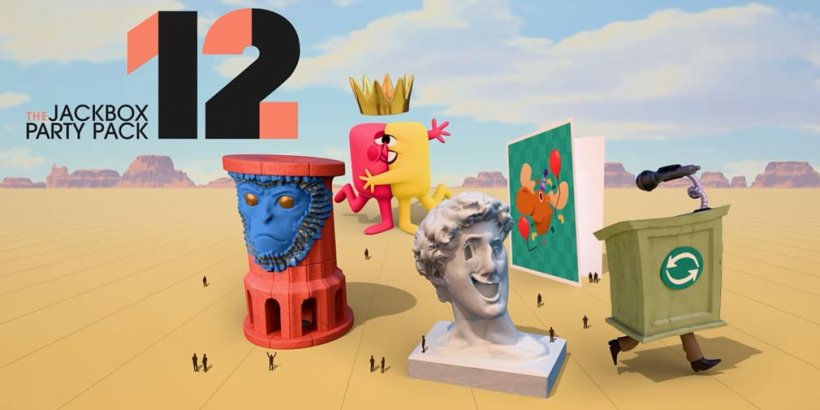
- Jackbox Party Pack 12 is right around the corner, with exciting new additions to come
- We got the chance to chat with longtime Jackbox dev Allard Laban
- So read on, and find out more about why you should be hyped for this newest release!
For virtually anyone who likes video games, the Jackbox Party Pack has been a constant fixture of any gathering, whether it's classics such as Quiplash and Trivia Murder Party, or one-time wonders like Talking Points and Joke Boat. Now, with Jackbox Party Pack 12 on the horizon, we spoke to longtime dev and chief creative officer Allard Laban to find out more about the hit series.
Why do you think Jackbox has stayed so popular with the Party Pack format?With our 12th Party Pack, I can only assume the subliminal messaging in our theme songs has been a wild success! I’m kidding! I think players have enjoyed the journey as much as we have, and they want to see where we’re going next. Each season brings us new, funny and weird ideas. We’ve also been lucky to have a five-game format that lets us keep experimenting, stay open to new ways to make each other laugh, and push the limits of our two-screen experience.

While developing You Don’t Know Jack for Ouya, we realised players were very unlikely to buy extra controllers just to play our game. That led us to develop the JackPad, an app on Google Play and iOS that let players connect to the game on their console over local Wi-Fi. It meant multiple people could play together in the same room, and it was the first breadcrumb on the path to a new format.
Were there any technical stumbling blocks or challenges with introducing phones as controllers?The Jackpad worked, but we realised it could be a lot better with a lot less friction. Players still had to download a second app on top of the game, manage Wi-Fi settings, and so on. There was a lot to optimise. Once we moved to a web-based solution, all players had to do was enter a room code.
We tested an early multiplayer version of our game LieSwatter at the Music Box Theatre in Chicago. To celebrate the successful test, we went for a bite at a nearby restaurant, where we played the first version of Fibbage as a group using an early build of our e-cast system. The waitstaff and other diners crowding around were an early sign that we might be onto something. Jackbox games have always had an uncanny ability to draw a crowd. Shortly after, we released a phones-as-controllers version of Fibbage, and its success led to the first Jackbox Party Pack. The rest is history.
With Jackbox's legacy stretching all the way back to the 1990s with You Don't Know Jack, do you think anyone ever imagined it would last all the way into the mid-2020s?As someone who helped design the original Volume 1, I can report with confidence that no, I could not have predicted it! It came in hot: we had only a few months to take the game from a HyperCard demo to a full CD-ROM product. We did know, though, that we were onto something special. I think we pushed the technology in interesting and very human ways. The goal was to balance player interaction with presentation. We knew there were people at the keyboard, and it was up to us to entertain them and put on a show.
A lot of games at the time handed full temporal control to the player, so nothing moved until you clicked on something or moved your character. In YDKJ, it was up to the player to keep up with us. If you didn’t respond, the game would react to that, but it wouldn’t slow down or stop for you. We’re a bit more lenient nowadays, but that approach created a kind of social contract between the players and the game, one that kept people listening and engaged so they wouldn’t miss out.
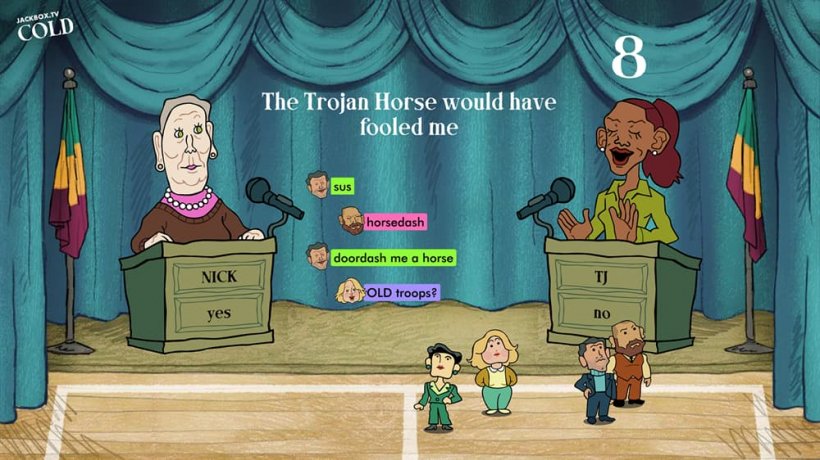
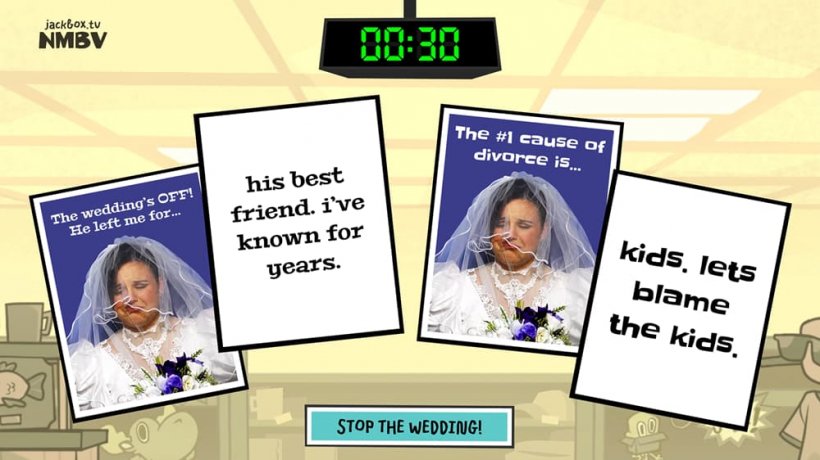
With Party Pack 11, we consciously stayed away from leaning on a returning title. We wanted to challenge ourselves to go bigger and find five new games. It was fun to push ourselves that way again, and this time the games that were pitched felt well suited to the time we had to develop them, while also pushing the two-screen model in new ways.
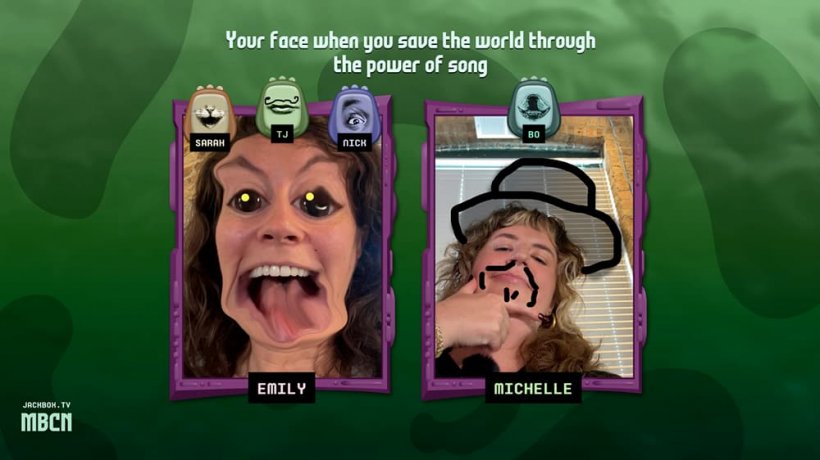
We Forgot a Card was one of the first games greenlit, and it set the tone for the rest of the pack. The first time I played it, I remember thinking, “I cannot BELIEVE we hadn’t thought of this yet!” It’s a classic Jackbox user-generated-content game with such a natural reveal: showing the inside of the card! Every other game came in with the same vibe: “Of course we should make this!” We scratched a few new itches with this release: photo manipulation in Hyperface, player matching in MegaPals, head-to-head debate in Debate and Switch, and a long-hoped-for tower-defence-style trivia game (and my personal favourite); Idol Factions.
We’re super excited about where we can go with publishing. Our initial focus is on games that feel like part of the family without competing directly with our party games, and My Arms Are Longer Now fits the bill perfectly. Toot Games’ background in improv and comedy speaks to where we come from too (the Chicago improv community), and they love making very weird games, which is right up our alley. We haven’t announced any mobile platforms yet, but we’ll look at every platform for each new title we publish.
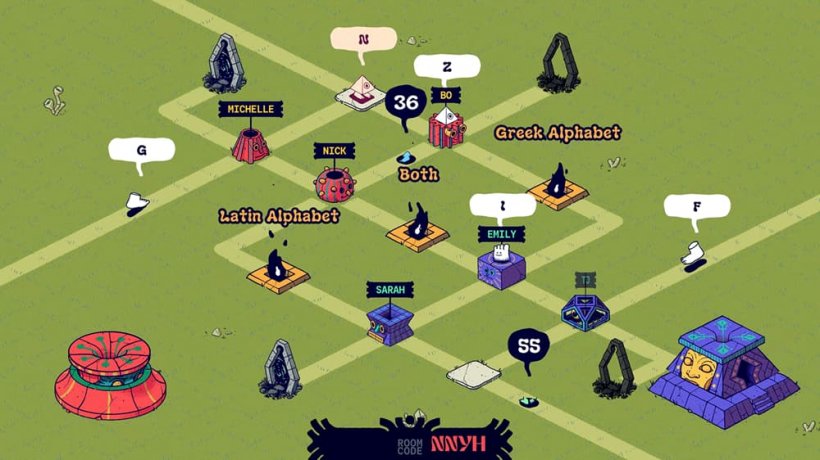
Most of all, thank you for taking this journey with us! We read every review, watch as many streams as we can, and take all the feedback to heart. We try to make every player the star of their own game, and without you, your feedback and the jokes you make in our games, we’d be nowhere near as successful.
While Jackbox hasn't yet had one of its Party Packs solely available via mobile, I would bet that it wouldn't be where it is today if not for smartphones.
Still, if you want to supplement your Jackbox addiction with some mobile originals, we've got you covered. Why not check out our latest list of the five new mobile games to try this week for some choice picks?
