Ragnarok X: Next Generation tier list (September 2026) - Ranking every class

Updated on September 2nd, 2026 - Version: 2.4.0
In our Ragnarok X: Next Generation tier list, we rate all the game's classes, and we also discuss what each one can do. We cover the elements that make each class special, among many other things.

If you’ve played any of the Ragnarok games before, honestly, you might not even need to read this, as not much has changed. At least when it comes to classes, job advancements, and skills.
Still, since not everyone’s a veteran (new players join every day), we’ll go over every class, their skills, and whatever else you need to know so you can start playing Ragnarok X: Next Generation with a character that fits your playstyle.
How we rank each class
If you are wondering how I came up with these rankings, let me explain. Here are my three main criteria:- PvE: How fast they farm and level.
- PvP: How strong they are in fights.
- Accessibility: How easy and cheap are they to play
Even though we will get into a bit more detail in the next pages, in general, I'd say that Mages are great at fast AoE farming, even though they need investment when it comes to gear. Archers do steady boss damage and work well on a budget. Thieves can hit hard and be OP in PvP, but need a lot of gear investment. Merchants fight poorly, especially early on, or need lots of Zeny to be useful. They do get better in the late game, though.
Ragnarok X: Next Generation Tier List
| Name | Tier |
|---|---|
| Acolyte | S |
| Mage | S |
| Swordsman | A |
| Archer | A |
| Thief | B |
| Merchant | C |
Over the next few pages, we'll get a bit more into the weeds about each class.
Acolyte | Mage | Swordsman | Archer | Thief | Merchant
Updated by Mihail Katsoris.
1
Acolyte
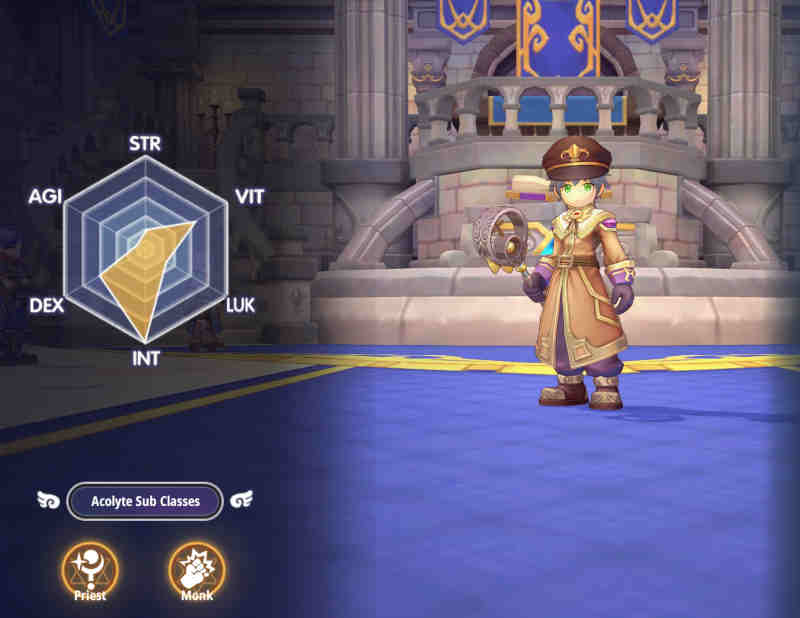
What else to say about this class besides that it’s the classic support? Basically, focus on keeping your tank and carry alive with heals and shields while you stay in the back. Cast your buffs on your teammates before the fight starts, then spam heals and shields as the fight goes on.
Core skills
- Heal, Kyrie Eleison (barrier)
- Blessing (team stat buff)
- Sanctuary (area heal)
Damage options
Aspersio adds holy damage vs mobs, and Angelus / Gloria boost party defense and luck.Subclasses
- Priest → High Priest: Pretty much full support with more area heals and team buffs. Judge (holy AoE), Lex Divina (silence), and Suffragium (haste).
- Monk → Champion. This one turns Acolyte into close-range burst DPS with combos like Quadruple Blow and Combo Finish.
When it comes to stats, put points into INT for stronger heals and DEX for faster casting; if you pick Monk/Champion, add melee stats and use your Acolyte heals to survive in the front.
2
Mage
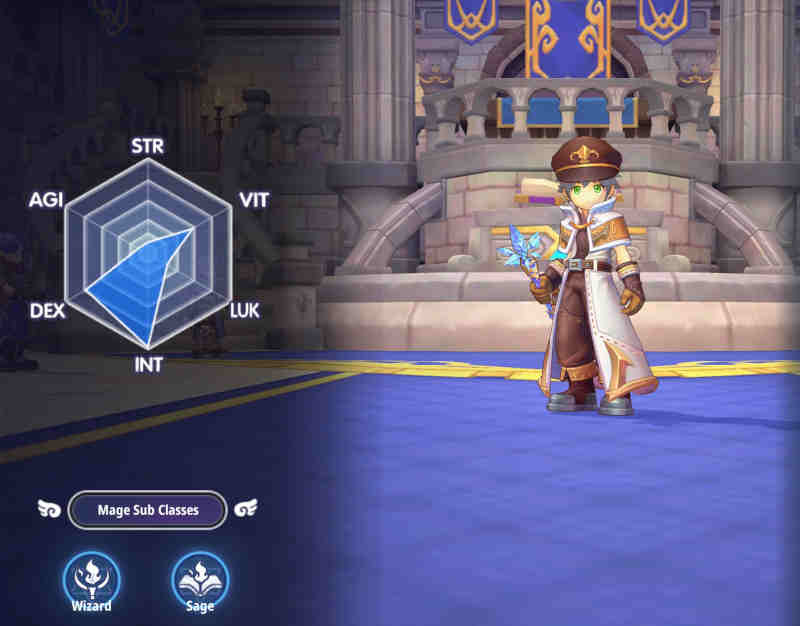
The Mage uses spells to deal damage and control enemies (CC). In general, you want to stay in the back line and use area spells (AoE) to hit as many mobs as possible, or single spells against bosses.
As for the Mage's playstyle, it’s not terribly hard, but you need to be a bit careful because this class is a bit of a glass cannon. In other words, it deals a lot of damage but doesn’t have great defenses.
Subclasses
- Mage → Wizard → High Wizard: This is the more "standard" Mage path. You play from range and focus on big area spells that hit many enemies. Positioning and timing matter
- Mage → Sage → Professor: You play as a debuffer, which is a more tactical role, I guess. You interrupt enemy casts, lower magic defenses, provide team utility, and occasional heals.
Core Skills
- Fire Bolt: single target fire damage
- Fire Pillar: strong single fire hit
- Storm Gust: area water damage and control
- Meteor Storm: big area fire damage with stun
- Chain Lightning: hits many enemies
- Dispell: lowers enemy magic defense
- Health Conversion: convert effects to heal
As I've mentioned earlier, this class does require gear investment to unlock its full potential.
3
Swordsman
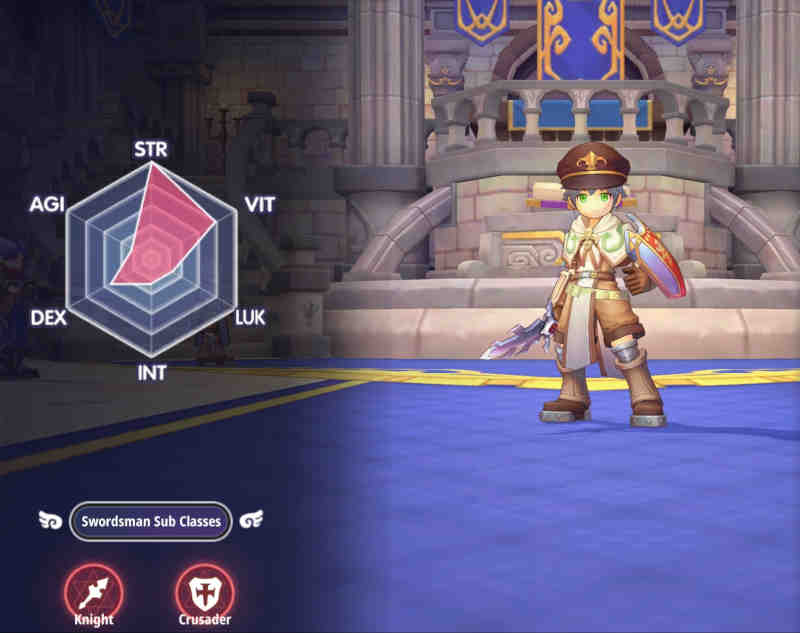
Swordsman is the frontline tank class. They equip heavy armor and use a shield.
Their main job is to taunt enemies and take hits for their team. Dealing damage isn't really their priority.
Stats-wise, they usually go for high VIT (health and defense) and some STR for stronger attacks. Their playstyle is simple: taunt groups, survive big hits, then use heavy strikes on bosses.
Subclasses
Pick a subclass to match your role:- Knight is a tank that taunts packs and deal AoE.
- Lord Knight keeps tanking but adds single-target burst and a team buff.
- Crusader mixes tanking with healing and stuns to help allies.
- Paladin focuses on defense and auras for long fights.
4
Archer
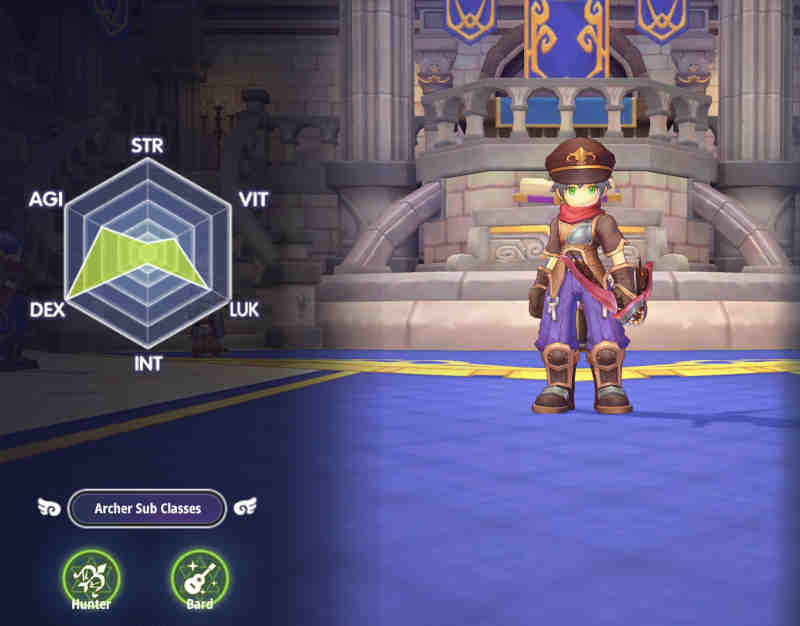
The Archer class has two paths you can follow. One is the Hunter/Sniper path, and the other is the Bard/Clown path. As a general comment, I’d say it’s a bit like the Mage class in the sense that the Archer also deals significant damage (with gear investment, however), but has almost zero defense and low HP. It relies mainly on its speed/mobility and good positioning.
Below, you can see the differences in the playstyle of each path.
Subclasses
- Archer → Hunter → Sniper: This is the 'classic' playstyle of the Archer class. It plays from a distance with long-range attacks that deal high physical damage, and traps that can CC (crowd control) opponents.
- Archer → Bard → Clown: With this path, the Archer is no longer a damage carry, but a hybrid DPS/support. The kit is interesting, with skills that can deal AoE damage, CC enemies, and provide various party buffs.
5
Thief
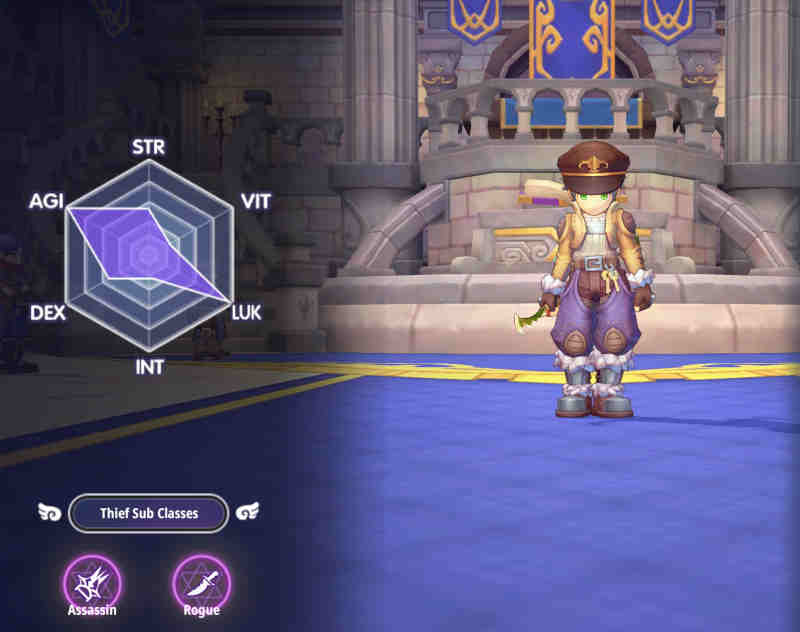
The Thief class has two available paths: the Assassin and the Rogue. It can become extremely powerful, especially in PvP scenarios, but it requires a lot of investment in gear and good timing. That is to say, among other things, you also need relatively low ping.
Now, let’s look at the two paths and let me give you a short description of each.
Subclasses
- Thief → Assassin → Assassin Cross: Typical assassin gameplay. Come out of stealth, focus single target and burst them down with high crit/poison damage.
- Thief → Rogue → Stalker: This path is quite different since it doesn't have as much burst; instead, it relies on blinds and debuffs. It's tankier but has lower damage output.
6
Merchant
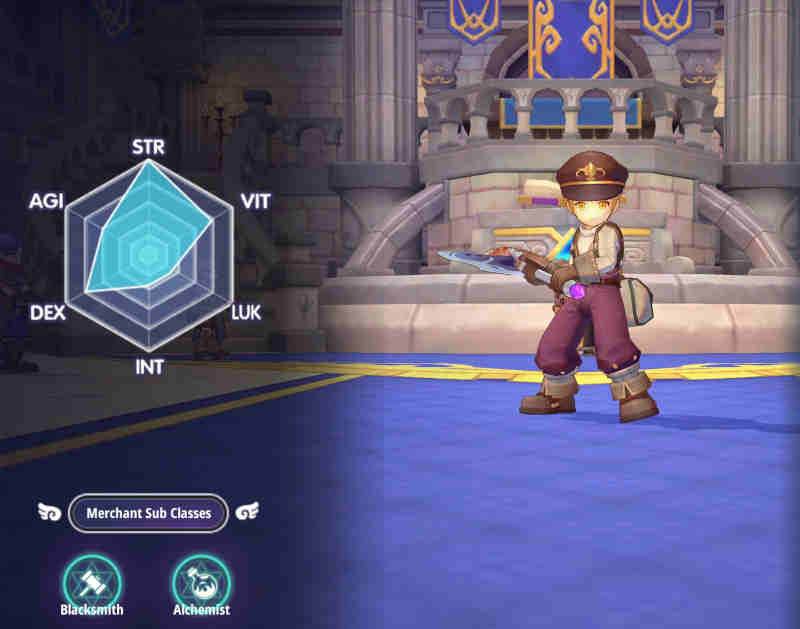
The Merchant is the only econ class in the game, as it has a passive ability that increases the prices of items when you sell them to an NPC. Because of this ability and with proper farming, it can accumulate Zeny very easily.
Now, regarding its battle skills, it is an AoE melee damage class that also has CC (crowd control) in its kit. Of course, this also depends on the path you choose.
Subclasses
- Merchant → Blacksmith → Whitesmith: This is the "fighting" path of Merchant. Melee attacks, cart-based physical damage and party buffs.
- Merchant → Alchemist → Creator: If you enjoy a summoner playstyle, you might actually like this as it has group attacks, summons Homunculi and can use unique crafted potions.
In the beginning, this class isn't very strong, which is why you'll see it rated quite low on various tier lists, including our own Ragnarok X: Next Generation tier list. However, in the late game -and with a significant amount of investment- this class can become quite good.
I believe we covered pretty much everything about all the classes in the game. I hope you now have a clear picture of what each one does, so you can choose the class that fits your playstyle.
Thanks for reading! And remember, we've made rankings for plenty of other games too. For example, we have a Summoner Slime skills tier list and Doomsday: Last Survivors tier list.


