I Want To Play The Villain makes keeping bratty actors happy a surprisingly enjoyable endeavour
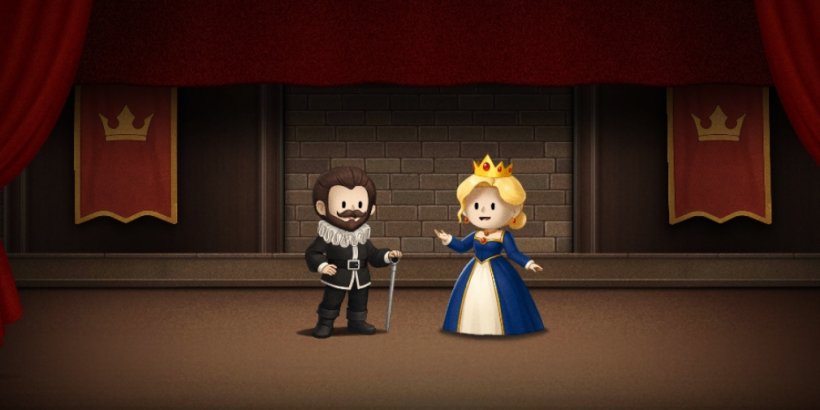
In media, I generally prefer the villain. Because they don't have to worry about boring things like morals, they're often far more interesting than their goodie-goodie counterparts. So, when I heard the name I Want to Play the Villain, I figured I'd finally get to live out my dreams as some malevolent entity. Imagine my disappointment, then, when I found out it's effectively a team management simulator where the goal is to keep actors happy.
That disappointment quickly evaporated, though. I love a puzzler that takes a simple concept, then slowly adds layers of complexity, constantly offering up new challenges without spiking the difficulty out of nowhere. Here, that's matching actors with roles, taking into account their various, sometimes bratty demands. The key to theatre success, evidently, is bowing to everyone's needs.
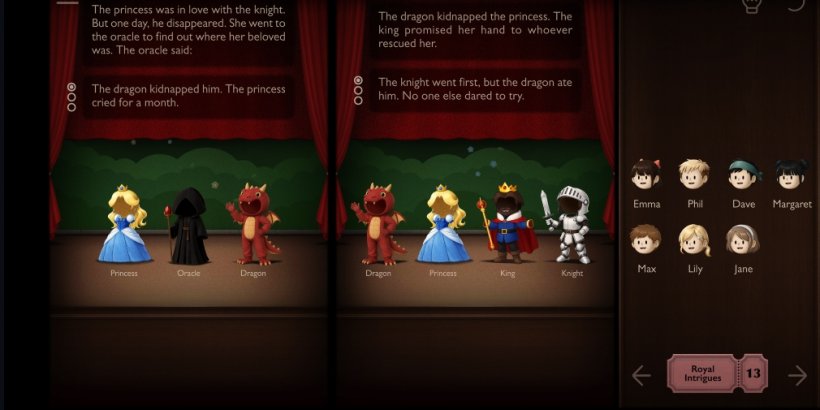
At first, this is very straightforward. One actor might want to be a princess or a non-royal character, and it's a simple case of dragging and dropping them into a role that fits their criteria. Putting them in the right spot sees a green comedy mask appear above their head, while getting it wrong causes a red tragedy mask to appear. There's no fail state here. Instead, you simply shuffle the cast around until everyone's happy, which is somewhat ironic, since there's no real drama here.
The plot thickens...
But that's not a bad thing, and it ultimately leads to less frustration when additional complexities are thrown into the mix. As you progress, I Want to Play the Villain introduces new demands from your picky cast. Some will refuse to perform alongside other individuals, while others will want a specific costume style. Often, these can clash, making it tougher to find everyone a home, making it all the more satisfying when you finally manage it.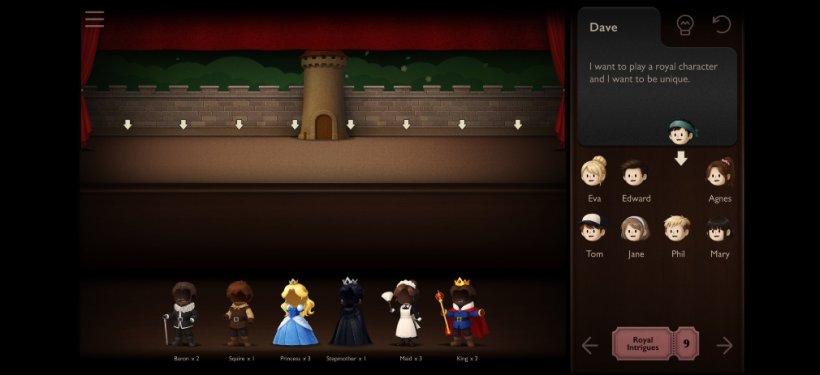
To keep things fresh, I Want to Play the Villain also has a few different setups. Aside from the standard four-person cast, levels with additional scenes crop up later alongside some that include snippets of story. With the latter, you can tweak the story to change characters or their role in the play, providing another layer of brain-teasing. A third level type sees you given a finite number of costumes to work with, dragging both the outfit and assigning a cast member to it. It sounds like fairly small changes, yet it allows for a surprisingly wide variety of conundrums to tackle.
On top of all that, it's just really cute. The little actors are closer to toys than people, and watching their glee when they’re placed in their desired role makes me equally happy. It might not be the hardest puzzler ever, but it's a pleasant way to tease your brain for a few minutes.


