Reverse: 1999's developers tell us how the hit mobile RPG builds its collaborations
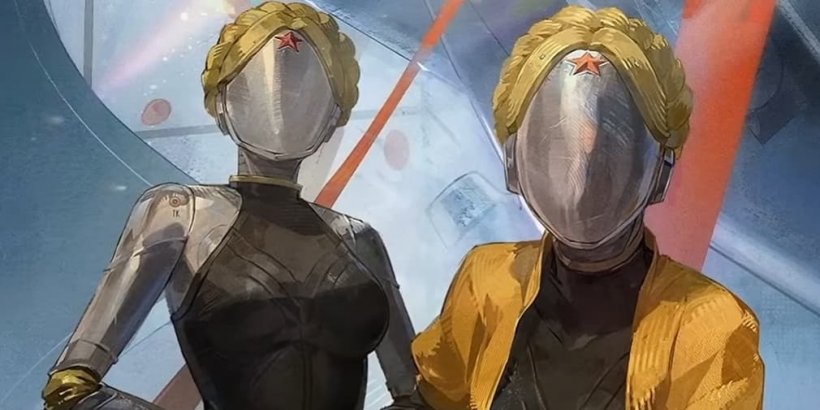
- Reverse: 1999 recently hosted its Atomic Heart collaboration this summer
- But how do these collaborations actually come about?
- We got the chance to put our questions to the folks at Bluepoch
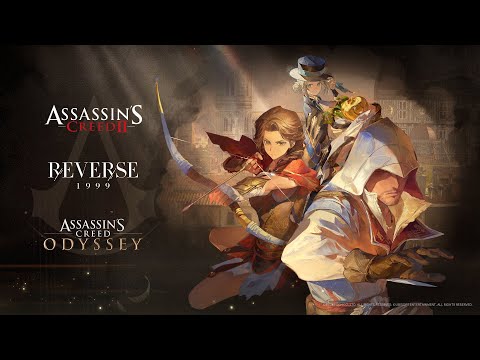
Aside from its in-depth focus on art and music, one of the more distinctive elements of Bluepoch's Reverse: 1999 has been its recent collabs, featuring most recently Assassin's Creed, and before that, Atomic Heart. The retro Soviet sci-fi adventure game was the focus from July and into August, and seems to have been fairly popular with players.
But while we know a lot about the collaborations themselves, we don't always know what goes on under the hood, so to speak. So, we reached out to the developers at Reverse: 1999 and got some information on how exactly collaborations are designed and created.

Atomic Heart's team had expressed interest in Reverse: 1999's art style before, and we'd been following their project ourselves while researching retrofuturistic works. After that, the two sides connected through official business channels and agreed on a collaboration.
Can you tell us a little about how the alternate history of Atomic Heart ties into the time-travelling narrative of Reverse: 1999?We used Reverse: 1999's pre-established Stage in the Rain to bring Vertin and the others into an alternate universe where arcanum doesn't exist. In that world, technology followed the same developmental path as in Atomic Heart's setting. As a gateway between worlds, the Stage in the Rain provided an avenue for us to explore this new story. The collab story doesn't alter either game's established timeline; it exists as a standalone event in a parallel possible world.
When you were bringing the world of Atomic Heart to Reverse: 1999, what were the key aspects you wanted to do justice to?We focused on two things. First, the atompunk aesthetic and Constructivist design language. Second, core technological concepts such as Polymer and robotics. We wanted to emphasise those elements through the narrative, the background design, and the UI design, all within our 2D turn-based framework.

In the collab story "Polymerized Dreams," players stepped into Facility 3826 as invited scientists and gradually encountered that world's technology, robots, and core concepts. We hope players had a good time travelling with Vertin and the others through this world, where there's no arcanum but plenty of Polymer and robots of every kind.
And what do you think Atomic Heart fans will have found fun about the collab?We hope longtime fans of Atomic Heart will have enjoyed the multitude of references in this collab. For instance, the collab features a 2D recreation of Facility 3826, playable versions of the Twins and NORA, and design easter eggs such as Constructivist posters and puzzle mechanics. Granny Zina and other characters from the original game also appear in the story. We hope these details will have resonated with Atomic Heart players.
Why do you think it is that players keep returning to Reverse: 1999?We believe the main draws are a steady stream of high-quality stories, a distinctive art style and music, and the freshness that new characters and new gameplay bring. Player retention comes down to a combination of factors.
When choosing where to set a story, we often consider whether a particular place at a particular moment in history carries a distinctive cultural or historical tension. A place with a strong visual identity can also spark our interest. From there, we research its history and culture in depth, looking for the details that make that particular place distinctive and considering how they can inform both the narrative and visual experience.
Finally, how do you manage to keep up with all the updates necessary to run a game like Reverse: 1999?To keep putting out solid, high-quality content on a fixed schedule, you need a production pipeline that's stable, transparent, and can adapt as needed. And just as importantly, writing, art, and design all have to stay in close, constant communication.
Along the way, we've run into plenty of challenges—creative bottlenecks, technical headaches, all of it. What we usually do is just come back to the content itself, making "premium content, both in quality and quantity" our top priority. We ask ourselves: what story do we actually want to tell here? What kind of experience do we hope to provide? Once we've got a handle on that, the technical and scheduling problems always work themselves out.
Well, there you have it, a pretty detailed breakdown of how it all works! With Reverse: 1999's Assassin's Creed collaboration now underway, there's never been a better time to jump in and give it a go. So be sure to check out our Reverse: 1999 tier list for some of our suggestions for characters you should work to recruit!


