Titanium Court review - “I can’t tell whether I hate it or love it but I definitely had fun.”


While it’s produced some absolutely fantastic examples of the medium, the ‘games as art’ movement has also produced more than its share of bland entries. Stuff like Dear Esther, for example, made the term walking simulator a negative descriptor. But there’s a special niche for those which firmly poke and prod at the player’s expectations and ego, such as Titanium Court.
Coming to us from developer AP Thompson and published by Fellow Traveler, Titanium Court is a weird, surreal journey into a magical world that has its tongue embedded so far into its cheek that it’s almost up its own ear. And yet, despite playing like a gaming undergrad’s experimental final project, full of whimsical turns of phrase and non-sequitur elements, there’s something genuinely gripping about Titanium Court that makes it worth playing.

Add a little bit of flashy, polished Unreal Engine graphics rather than the minimalist sprite work, and maybe some voluptuous anime women for good measure, and this could be the next Google Play Game of the Month. But Titanium Court subverts, twists and plays with your expectations, slowly unveiling new mechanics, enemies and strategy elements through humorous commentary and ‘advice’ from your fellow court members.
And pretty soon, you'll find yourself playing Titanium Court as much to see what it does next as to enjoy the core loop. Whether it's wacky interactions, whole new sections of the experience, or just figuring out exactly what it means when it's describing something, Titanium Court always has something new up its sleeve.
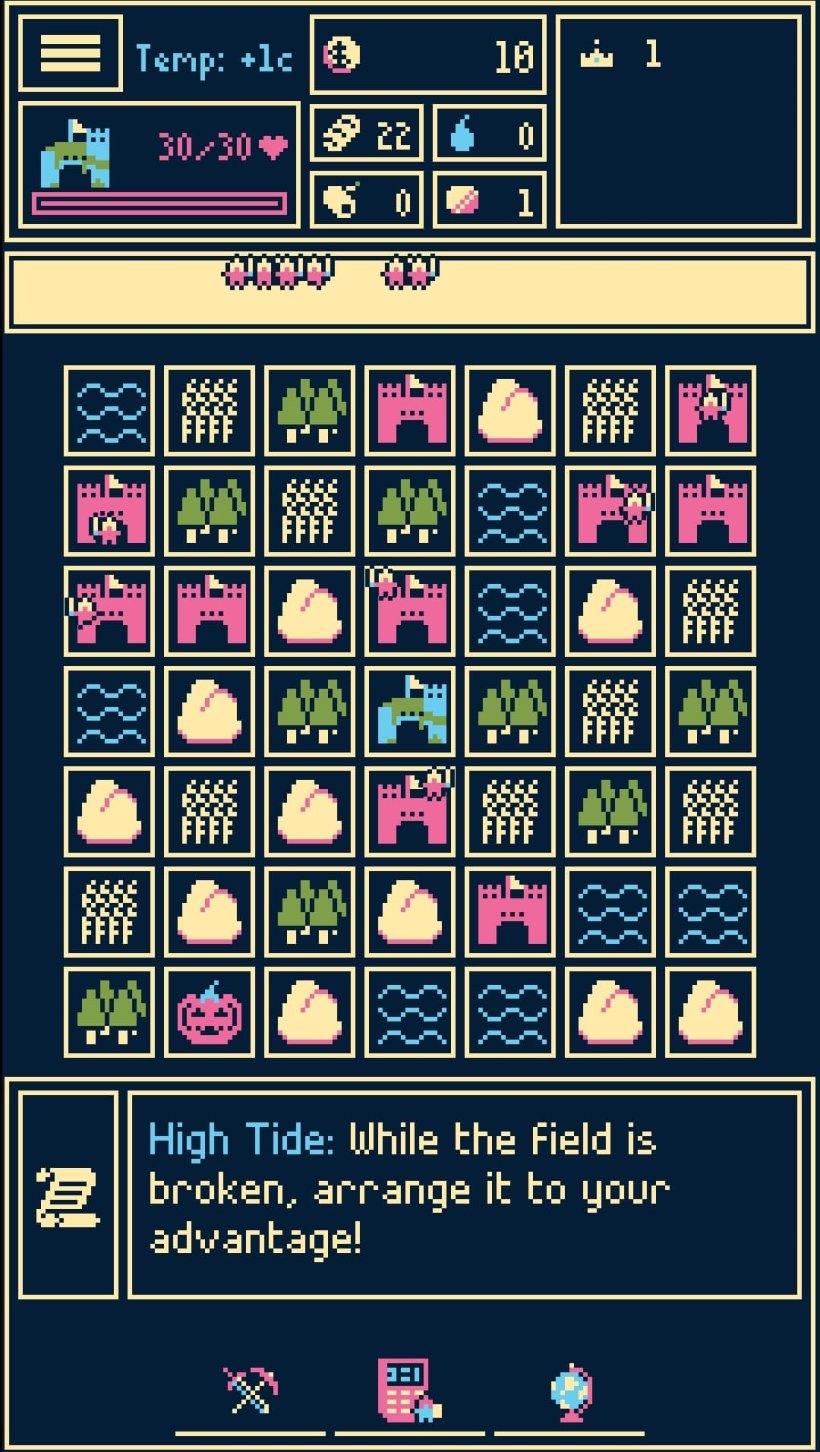
About the only critique I have of the core gameplay is that it can feel a bit confusing, even when it’s not trying to be, and a little bit hands-off in terms of information. Titanium Court doesn’t just expect experimentation; it demands it, and if you go in expecting to be spoon-fed all its secrets, you’ll very quickly become frustrated. Even so, the core elements of RTS and tile-matching can become a little bit awkward, especially as you run down a very generous timer with each tile moved, which can quickly cascade and turn a perfect position into one that leaves your court surrounded by enemies.
Meanwhile, the actual RTS elements are initially devoid of interaction once you kick off the battle. You collect resources during the match-three segments, then spend them to summon fresh troops with varying abilities, but once they’re on the field you have to hope for the best as there’s no way (that I found so far) to prioritise certain targets or direct them. And yes, they can be stuck on terrain, which can be quite frustrating when your troops are navigating the corner of a water tile while your court is being smashed to pieces.
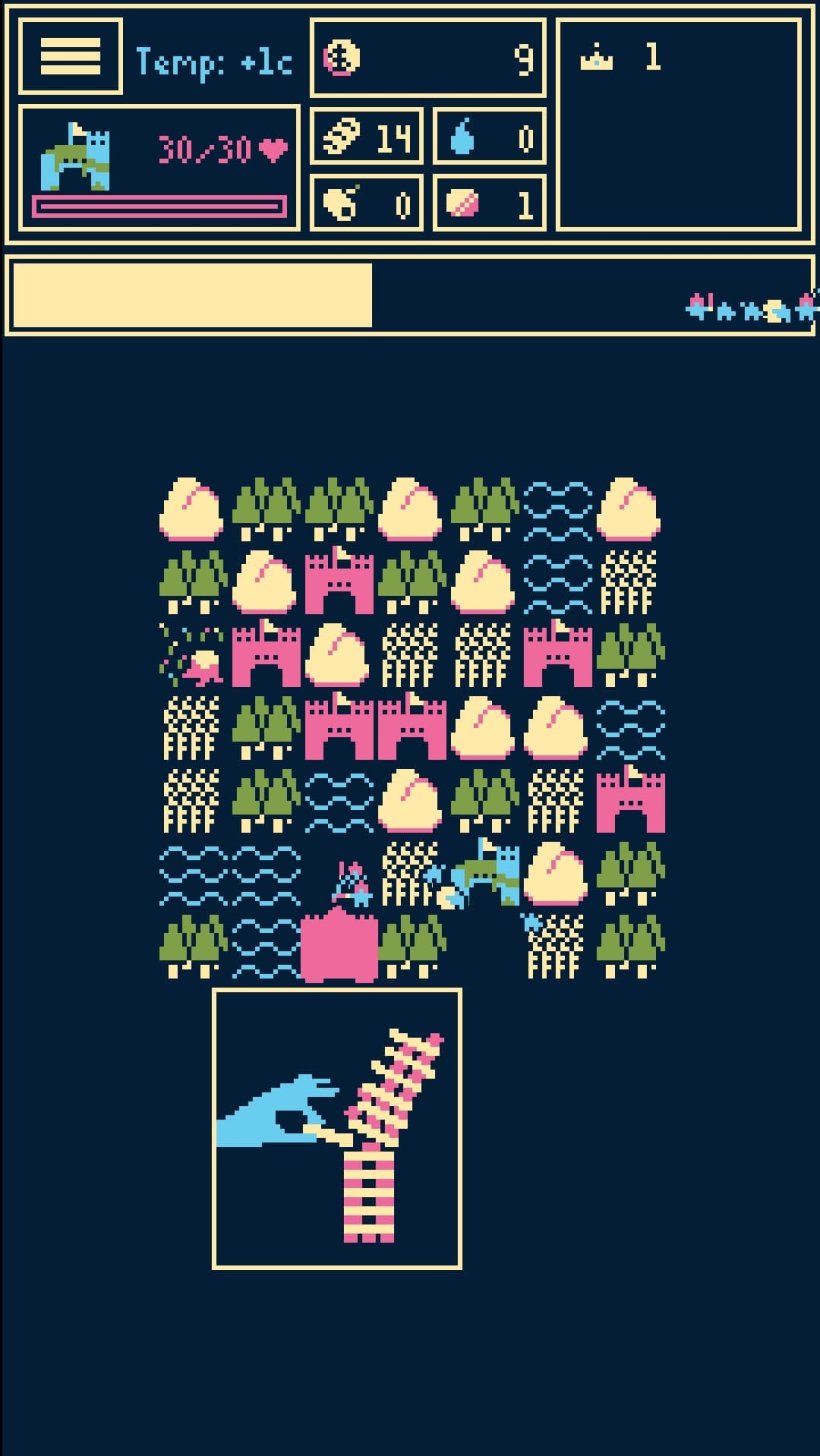
And yet, weirdly enough, it’s the mixture of constant jokes and non-sequiturs, not to mention the way Titanium Court slowly sprinkles in new mechanics, and even exploration sequences, that makes it so intriguing. Constantly balancing out the basics of resource management to ensure your army is strong, while also finding new surprises around every corner means that it will be a while before you feel you have a strong grasp of Titanium Court.
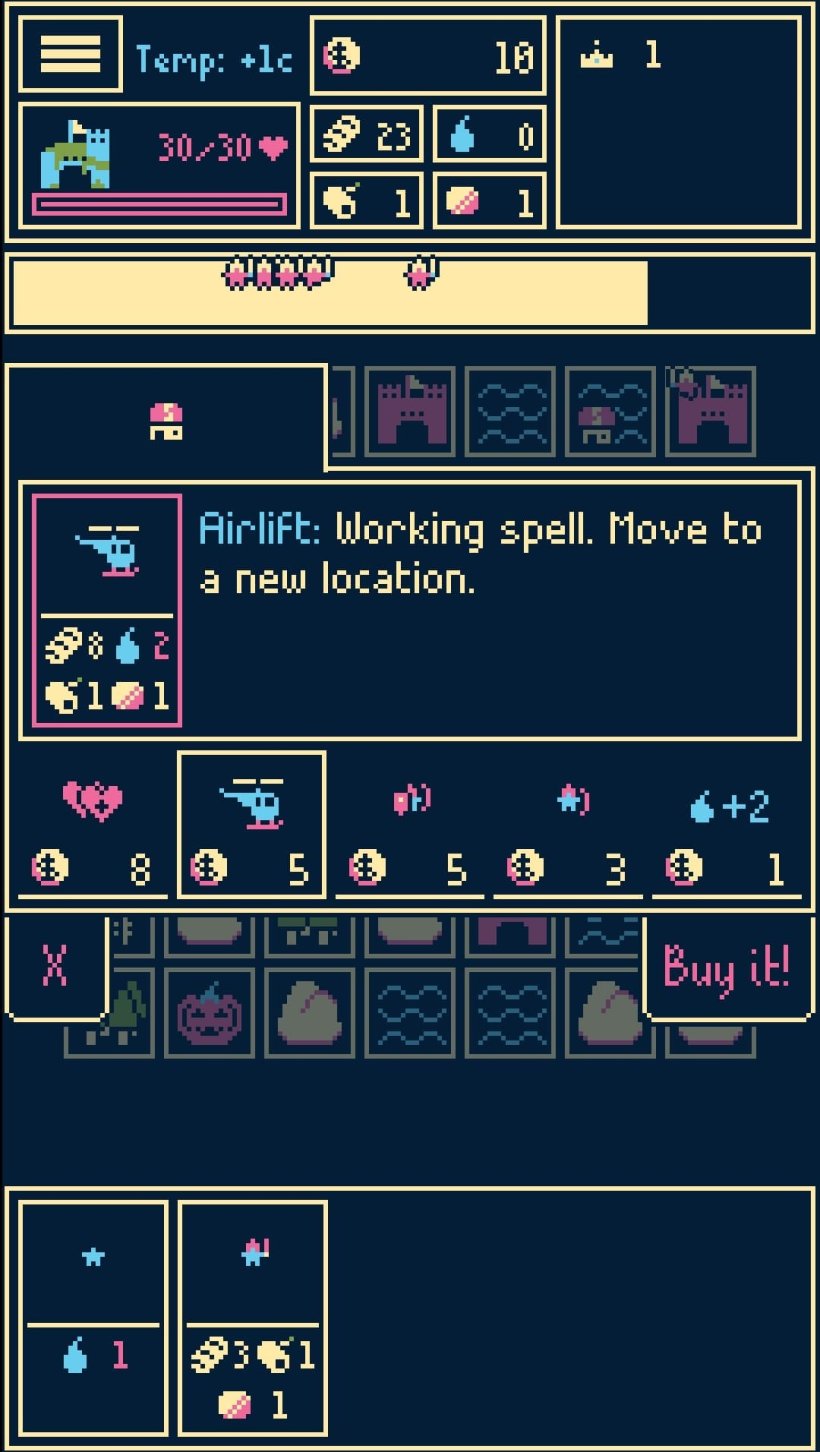
That’s what makes reviewing something like Titanium Court so difficult. Even a few hours in, it still surprises you, and while usually that’d be at odds with the rule that a game should reveal its hand by the time you’re two or three hours in, I find it hard to dislike it because of that. It’s colourful, jazzy, and the music is actually surprisingly soothing.
If you're wondering where it's good, then it's hard to make such a categorical statement. But, if you're asking me whether I had fun, then I can say that Titanium Court certainly delivers and fascinates me if nothing else. And unlike many other, far more polished examples of the genre, it rewards exploration, experimentation, tinkering, and even outright refusing to engage with it in new and unexpected ways.
And if I had to single one aspect out for unburdened praise, it’d be the graphics and music. Which I know is odd for a game which looks as strange and bizarre as Titanium Court does. But I feel that it really carries the look and feel of an 80s or 90s-style, obscure little release, while having all modern conveniences.
All that being said, Titanium Court is certainly not a game for everyone. And I can very easily see someone bouncing off the core gameplay before we even get into the surreal story, visuals and characters. But if you’re willing to keep an open mind and enjoy Titanium Court for what it is, I think you’ll find plenty to like here.

