Black Sailors' Tiago de Melo Prudente tells us why this upcoming naval strategy is one to watch
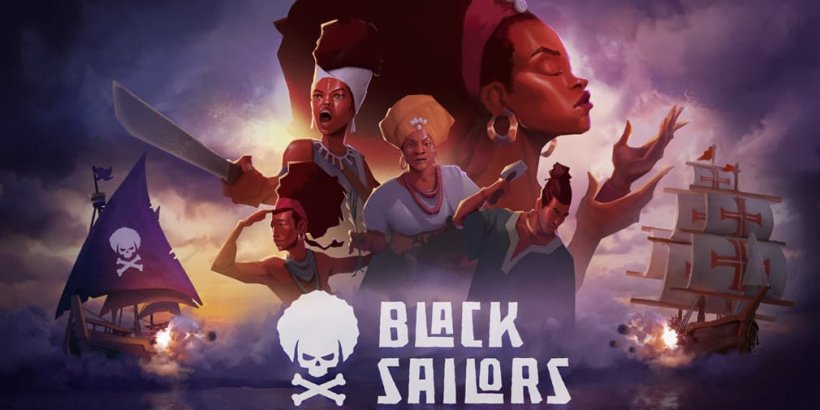
- Black Sailors: Bay of All Saints is an upcoming naval strategy exploring Brazilian history
- Taking place during a dark period of time, it sees a group of freed slaves become rebel pirates
- And Black Sailors promises to offer an intriguing mix of real-time and turn-based naval combat
While a country of vibrant culture and passionate people, Brazil has (like many countries) had its fair share of dark moments. Be that early colonialism or the decades-long military dictatorship that only broke with the return of democracy in the 1980s. They're difficult topics to tackle, but well worth doing.
Case in point, Black Sailors: Bay of All Saints by Mandinga Games, one of the upcoming releases I got to see at Gamescom LatAm 2026, sees a group of renegade enslaved peoples taking control of the ship transporting them to the titular bay. From there, you'll jump into an engaging story and equally challenging strategic naval combat.
Black Sailors is planned for a console-first release, but will also be making its way to mobile in 2027, offering an intriguing mix of real-time and turn-based strategic naval combat. During the last day of Gamescom LatAm, I got the chance to sit down with Tiago de Melo Prudente and discuss the game in-depth.
Can you tell us a little about Black Sailors and the concept around it to start off?Yes, the game is about a group of slaves that take control of the ship [transporting them] and become pirates off East Brazil. We are showing here sad moments in our history. During the colonisation of America, millions of Africans were brought here as slaves. So, Salvador, my hometown, was one of the main routes for the slave trade, [and] because of this, Salvador is today [seen as] the blackest city outside Africa.
And we want to build in this game a sense [of perspective] that goes against the Eurocentric point of view that we treat the African diaspora as a single thing, as a single bloc, Africa as a single country. Even in Brazil, we have a Eurocentric education that we learned that we are formed by Portuguese, by indigenous people and by Africans. We don't know our ancestors from Bantu, from Oyo, from Dahomey; we are representing all these ethnic groups in the game.
It's a pirate group, so each member of the group is from one ethnic group. And yeah, we want to show this part of the history, it's a decolonial game. So we are putting the power in the hands of the colonised and not the hands of the colonisers. So we are inverting the logic here.
How have players reacted to the announcement of Black Sailors?When we were in Brazil, it was awesome. Everyone was loving the game. The game was really anticipated here. But when we announced the game worldwide, we sometimes faced a bad reaction.
There are people that don't want to see the decolonial narratives in games. It was tough, but we passed it. In the end, we got more motivation to develop the game. We also got a lot of support from people that really want the game to go well and help us to get back through it. And a lot of people also want to defend the game because they really want to have this game live.
And yeah, I mean, we announced the game one month ago. In just one week, we got 2K [wishlists] with zero marketing. It was awesome for us.
And you plan to bring Black Sailors to mobile in, I believe you said 2027 was the planned date. Is mobile seen as a big opportunity for this launch?The biggest audience in Brazil is mobile. One of the principal reasons that we want to go mobile is because we want the Brazilians to be playing this game. And most Brazilians are playing on mobile.
Black Sailors also has an interesting mix of real-time and turn-based combat, where you plan and predict movements before they're executed in real time. Do you think that'll be well-received by players?
We have great reference for this. It's the game Arco. It was a great reference for us. And I think it's a way to appeal to the turn-based audience and also another audience that feels like turn-based is really slow-paced. So when you play a turn-based game, it the player turn, the enemy turn. The player turn, the enemy turn.

The traditional audience loves that. But there's this other [person] who really wants to see action. And then the way we are doing it, it's just like Arco, [where] you have the planning phase and then resolution.
So the game feels really dynamic. I think it will please the turn-based audience and also this other audience that wants to see a game more dynamic. A game where more, more, a lot of things happen.
Finally, do you have a special message for those looking forward to playing Black Sailors?Yes, I want to show you the world the Afro-Brazilian culture perspective. So I think we don't have too many games with an Afro-Brazilian perspective. We have other Afro-African perspectives, the black community from America's perspective, and we are missing this [Afro-Brazilian] perspective.
So I want to teach this to the world, [that this] is our perspective.
Strong stuff! And judging by the gameplay I saw, for naval combat aficionados, the mixture of turn-based and real-time is sure to be interesting. If you want to find out more about the dev scene over in Brazil, why not check in on our piece exploring what devs think makes LatAm so special for gaming!
