Ed Wu, President, Games at Scopely, on Pokémon Go's legacy - "Folks actually believed that Pokémon were real in the real world"

Pokémon Go has really done something no other game has in terms of connectivity between players. It's not just an in-game feature - instead, people connect from all over the world, in person, to play and chat, and make lifelong friendships. It's a fantastic thing that I have not seen in any other game. Hearing from Ed Wu, President, Games at Scopely, I asked him about the start of Pokémon Go from the very beginning (or even before the game existed).
"I love science, right, and I wanted to do something that was connected a little bit closer to the ear and to folks here in the real world. So that brought me to a group at Google called Niantic, which was led by John Hanke. That led me to building a game called Ingress, where I was one of the engineers who helped launch the game."
"I wrote a bunch of the proto code facts and shaders that you see rolled there and did a lot of work on the server so that we could build a game that could scale to millions of people all around the world on two teams which battled each other for control of the planet, but the thing about Ingress that really distinguished it, was that it was a single real-world instance."
This type of game wasn't split into realms or servers and instead was the whole world working together to solve a joint quest. It was something that brought people together and had them all collectively working towards a goal. Something like this wasn't created before, and it became the base that Pokémon Go as we know it is made from.
"We all live in a cohesive world, and likewise, Ingress was built in a way so that everybody who was playing Ingress lived and played in that same game map. As a result, when we launched Ingress, it was something that was unlike what came before in the gaming industry. We saw people changing the way they went to work, changing the way they lived their weekends, changing their lives to exercise and to explore."
Ed Wu, after seeing a lot of what made Ingress its own unique thing, felt that Pokémon had a lot of the same values: exploration, self-improvement, self-betterment, and healthy competition, so he felt that, as the leaders of the Pokémon Company had the same ideals, this type of game would work well for them. Pokémon Go became Ed Wu's life's work.

"What's important to me is the memories I've made while playing this game." When they first started creating Pokémon Go, they didn't have a ton to go on. "But we had this trailer, this incredible trailer put together by our marketing lead at the time, which showed a world where people were inspired to explore the world together because Pokémon were real in the world. They collected, they traded these Pokémon, they battled the Pokémon against each other and against raid bosses in a world where Pokémon had really come to life. And that trailer became our North Star."
"This game was built from the moment that we left Google in October of 2015 to a worldwide public launch in July of 2016, with a dev team of less than 20 people in just 10 months. The only reason that was possible was because of the clarity of vision that trailer provided. It brought us back every time to what we are trying to do. We are trying to inspire people to explore the world together through the magic of making Pokemon real in the real world."
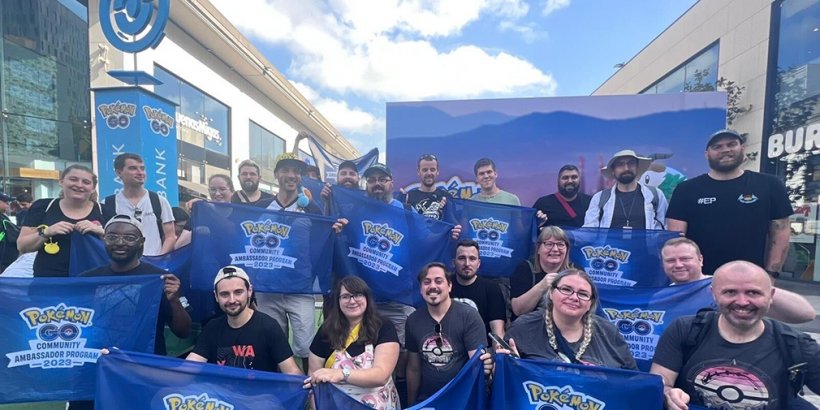
There is something that has always felt magical about Pokemon and about a game that connects individuals together on a different level. When playing Pokemon Go, we are taken out of that digital space and brought face to face with each other, in a way that we are all achieving. It's something that Ingress did on a smaller scale, but Pokémon Go brought it to a new level through the use of Pokémon itself. When Pokémon Go first launched, it did far better than even expected.
"One of the diagnostics that we would use, so this is a little bit behind the engineering curtain, is something called PBPS, which is a metric for Poke Balls per Second. It's the number of Poke Balls per second that are being thrown in game."
During the field test, where Ingress players (primarily) were invited to test Pokémon Go, the team measured PBPS to see how players were getting on with the game.
"There were only a couple thousand people playing, and I think six machines running here at the time. The couple of machines were peaking around three Poke Balls per second or so."
Then it became eight Poke Balls per second during the sign-ups as the field test continued to grow in numbers. "We knew from how much folks were playing during the field test that there was a good deal of enthusiasm for this game, but this could not have prepared us for the absolute wave of excitement that then followed when we concluded the field test and began to launch Pokémon Go globally."
When the game first launched, it started in New Zealand and Australia; thousands upon thousands started to flood in, then millions were downloading the game. Half the traffic, it turns out, wasn't from the select countries and instead was players all over the world getting into the game. This forced Ed Wu and the team to double, then triple the server's capacity, so that the game could stay up. They started removing spawns from other parts of the world to stop players from entering the game when it wasn't out yet, as the scaling was not able to follow the early demand.
"So that eight Poké Balls per second rapidly went exponential - fourteen thousand Poké Balls per second is like eight hundred fifty thousand Poké Balls per minute, right? It's like nearly a million Poké Balls per minute. People kept playing Pokémon Go after they started. The first week, even though we scaled up, it went to twenty thousand Poké Balls per second. By the time we got to much of our worldwide launch in early August, we were well north of twice that number."
Despite having all of the experience of creating Ingress, Niantic were not fully ready for how many players would be hungry for Pokémon Go. As a result, they did have a lot of server issues.
"Our partners at Google had never seen anything like this happen, and they were doing all that they could to scale up the number of machines that they could give us. By the end of the week, we had taken up the better part of an entire Google data centre, thanks to their support. Ten years ago, Pokémon Go was the largest computing cluster of its kind anywhere on the planet that had ever existed."
As there was so much to do and so many issues to fix, Ed Wu had a lot of sleepless nights and spent a lot of time just working on keeping the game up. But once everything had settled, he finally was able to see how people were reacting to the game in real life.

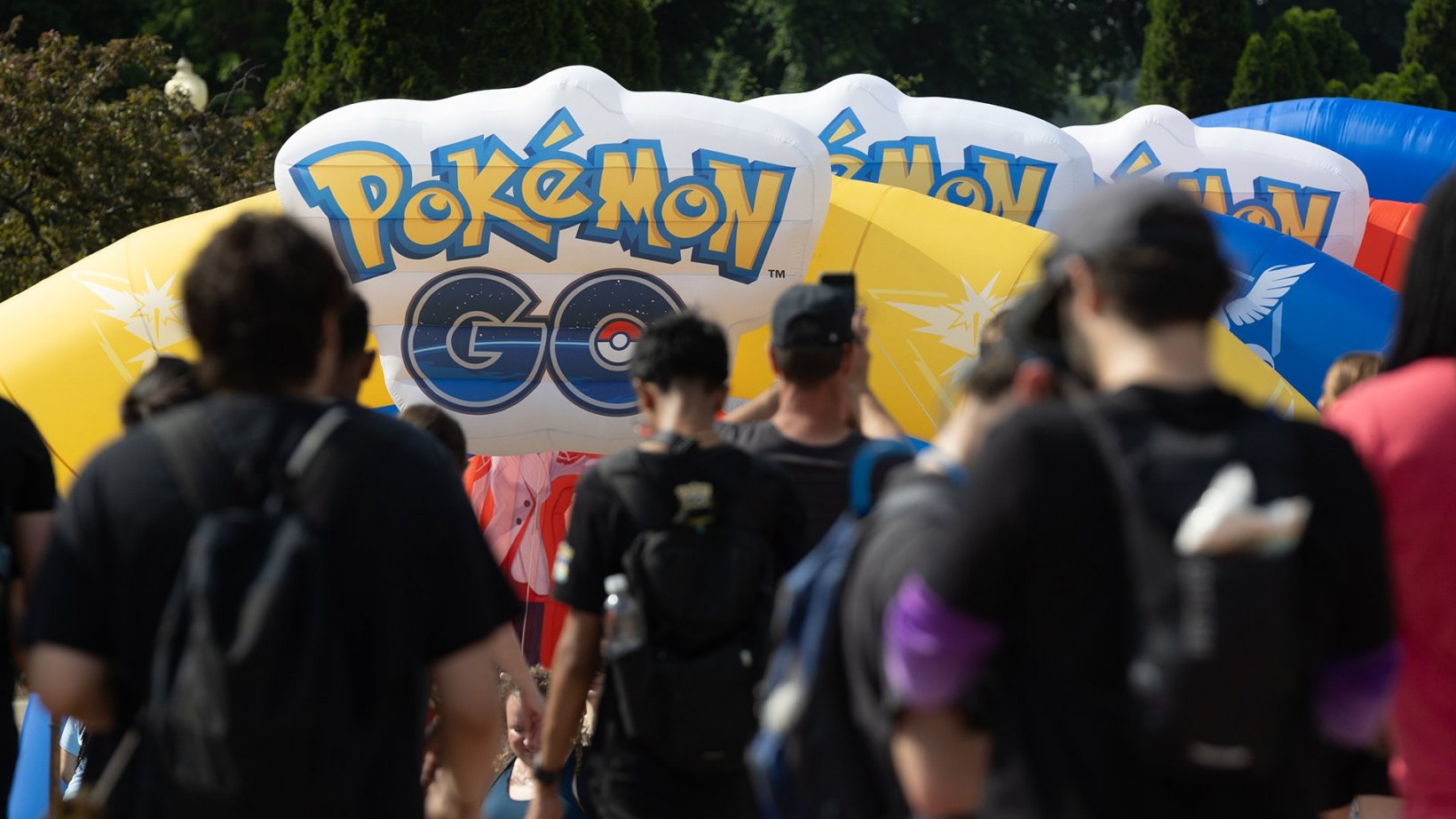
"It's like one thing to see that millions of people are playing the game concurrently on like some squiggly line on a graph. But it's another to actually go outside to Bellevue Park and witness thousands of people in a park, playing. I swear I was hallucinating because I had no sleep at the time. And what I hear is one person at the end of the park, and this is captured in a video by somebody, yell Squirtle, and like hundreds of people begin running in this direction. In this moment, I'm still not entirely sure whether it's real. I'm entirely gratified because we had made that trailer a reality, right? Folks actually believed that Pokémon were real in the real world."
Pokémon Go has become even more than that trailer, I would argue, and we are seeing so many lifelong friendships and memories made through this digital adventure. It's a forever game, one that has touched the lives of so many over the years, and one that will continue especially through all of the more recent changes and activations happening throughout the world.


