OUTERPLANE beginner's guide - All of the tips you need for mastering this strategy RPG

In case you missed it, OUTERPLANE is currently celebrating its Steam release opening the doors to Mirsha for a whole new group of players and giving returning adventurers another way to experience this fantasy world.
New players will also find a renewed opening story and tutorial. This time, you enter Mirsha as an Earthling who quite literally falls out of the sky and into a dangerously distorted dungeon. There, you run into Luna and her companions Delta, Lambda, and Viella, who are already dealing with threats of their own.

It soon becomes clear that your arrival is anything but ordinary. You possess a mysterious power known as a Quirk, a special ability sometimes bestowed upon Earthlings in this world, and yours appears capable of awakening a companion's potential. After seeing that power firsthand, Luna decides you would make a very useful addition to the group and brings you back to their home, the Ark Lemegeton.
From there, your unexpected arrival quickly turns into a much bigger journey across Mirsha. You'll recruit new heroes, take on increasingly dangerous enemies, and gradually uncover more of the world as you search for a way forward. It's not gonna be an easy journey; you'll need all the help and hints you can get, so here are some essential tips to get you started.
1
Advance the Story and Reap the Rewards

It's no surprise that OUTERPLANE is a big game, and it's only getting bigger. There are a whole slew of systems, modes, heroes, events, and rewards waiting for you, and trying to understand everything at once can feel a little overwhelming.
Naturally, your best bet early on is to simply keep pushing through the story, ideally until Story Season 1 Normal 3-5. Not only does this unlock many of the game's important systems — things like daily activities, farming stages, gear upgrades, and other progression features — but it also unlocks your Event Stories
Playing through Event Stories is a great way to earn much-needed experience and items while getting to know the different charms and stories of characters you may not have obtained yet.
As you move through the campaign, the game gradually introduces combat mechanics, enhancement systems, and team-building in a much more manageable way. In other words, you can figure things out naturally instead of being immediately thrown into the deep end by veteran players explaining “optimal rotations” five minutes after the tutorial ends.
Thankfully, the early-game experience is also extremely generous. Between story rewards, beginner missions, login bonuses, and available events, the game throws a steady stream of summon currency and upgrade materials at you just for playing normally. For once, progressing the story instead of hoarding resources is the correct decision.
2
Use Auto-Battle to Gauge Strength
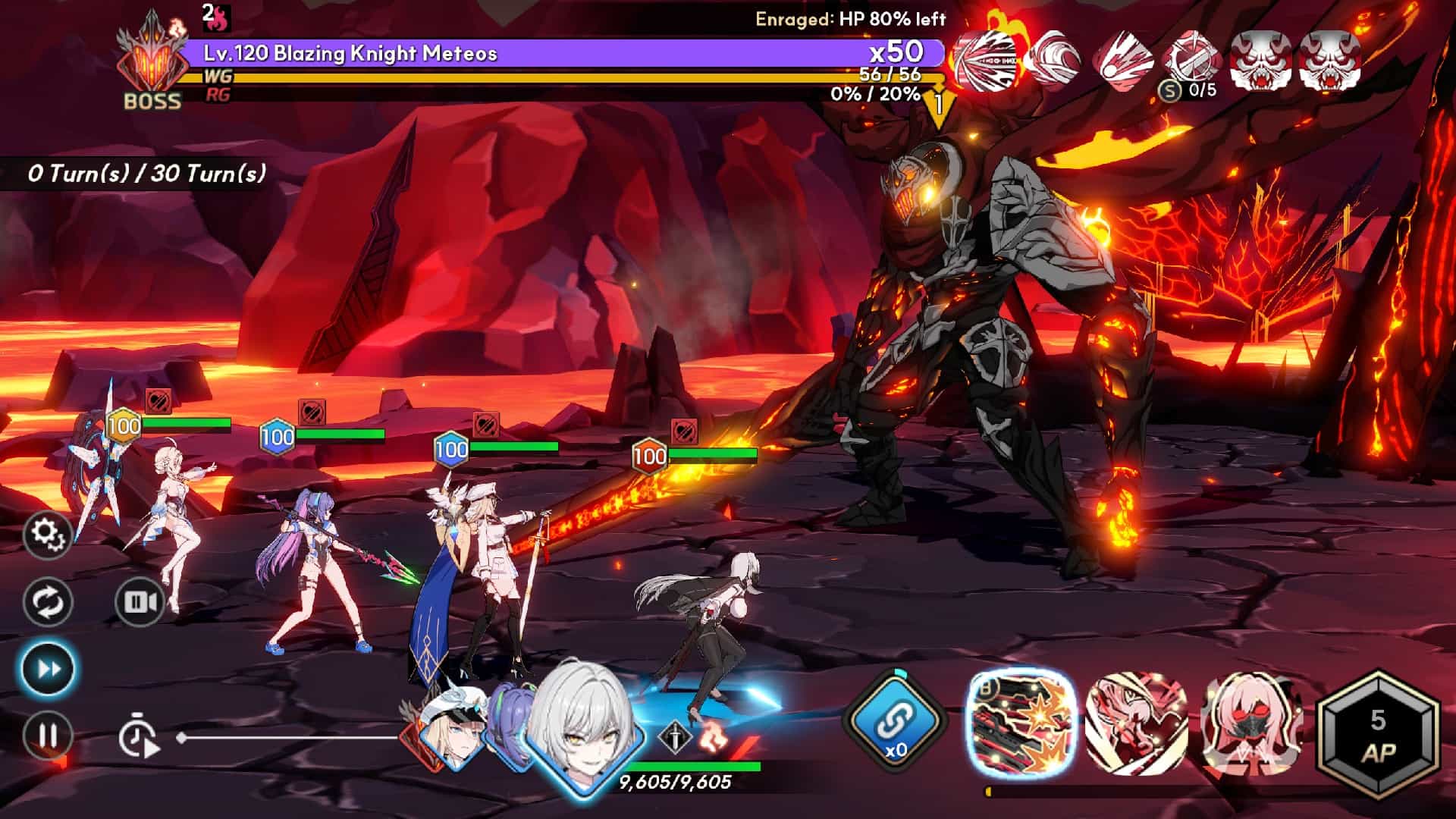 Whenever we play turn-based RPGs that allow us to control our characters however we want, it's normal to default to the tactic of “USE OUR STRONGEST ATTACKS FOREVER.” While this can definitely be an effective and amusing tactic to start with, it's not truly viable in the long term.
Luckily, OUTERPLANE provides an auto-battle function for times when you want to just sit back and watch the fireworks (especially if you have a character who uses fireworks). It's also an effective tool for measuring how enemies are evolving and growing in strength. If your team can comfortably clear a stage on auto, you're probably in a good position for that level of content.
When auto-battle starts to slip, battles take too long, your heroes begin dropping, or a boss keeps stopping the run, that's your sign to take over. Pay attention to skill timing, buffs, debuffs, priority targets, and enemy mechanics. Auto-battle is great for routine progression and farming; manual play is where you'll learn why your team works — or why it doesn't.
3
Syncing Elements is Groovy
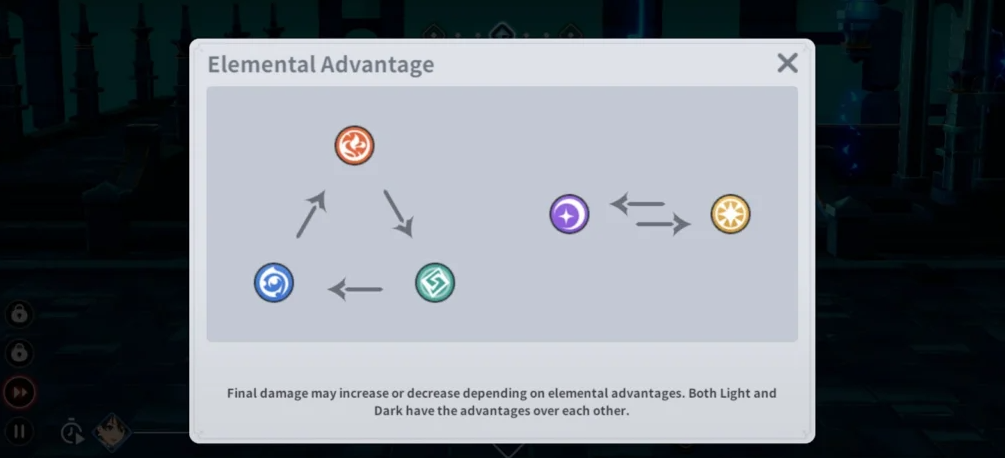
Like most RPGs, OUTERPLANE uses an elemental system for its different heroes. There are currently five element types: Fire, Water, Earth, Light, and Dark. You can guess how the rock-scissors-paper system applies here, with the enemies following the elements too.
While you can certainly make your team composition however you want, experimenting with heroes that work well together elementally can give your team some useful advantages in battle. The right elemental matchup can make a noticeable difference when you're trying to push through harder stages.
Don't feel pressured to build every possible elemental team immediately, though. Experiment with the heroes you have, learn which matchups give you an advantage, and gradually expand your roster as you progress.
4
Don't Let Syncing Dominate Strategy

Now, you're probably wondering why you're reading this tip after we made such a big deal about the sync-up. It's true that the sync-up unlocks powerful capabilities that can significantly benefit your strategy, but it has one major downside: inadaptability. When you have a team composed entirely of fire heroes, you'll be limited by their effects, no matter what classes they might be.
This is why you also need to consider forming a diverse, balanced team that can support one another in different ways while adapting to various enemy groups. Differing classes can make more of a difference than differing elements, especially when you don't have any significant weaknesses against the enemy groups.
A recommended beginner team setup is:
- 1 x Healer
- 1 x Damage Dealer
- 1 x Flex Slot (DPS or Tank)
- 1 x Crit Support (Recommendations: Valentine, Skadi, Tamara)
This structure provides enough survivability while maintaining strong damage output for story progression and boss content.
5
Examine your Enemies
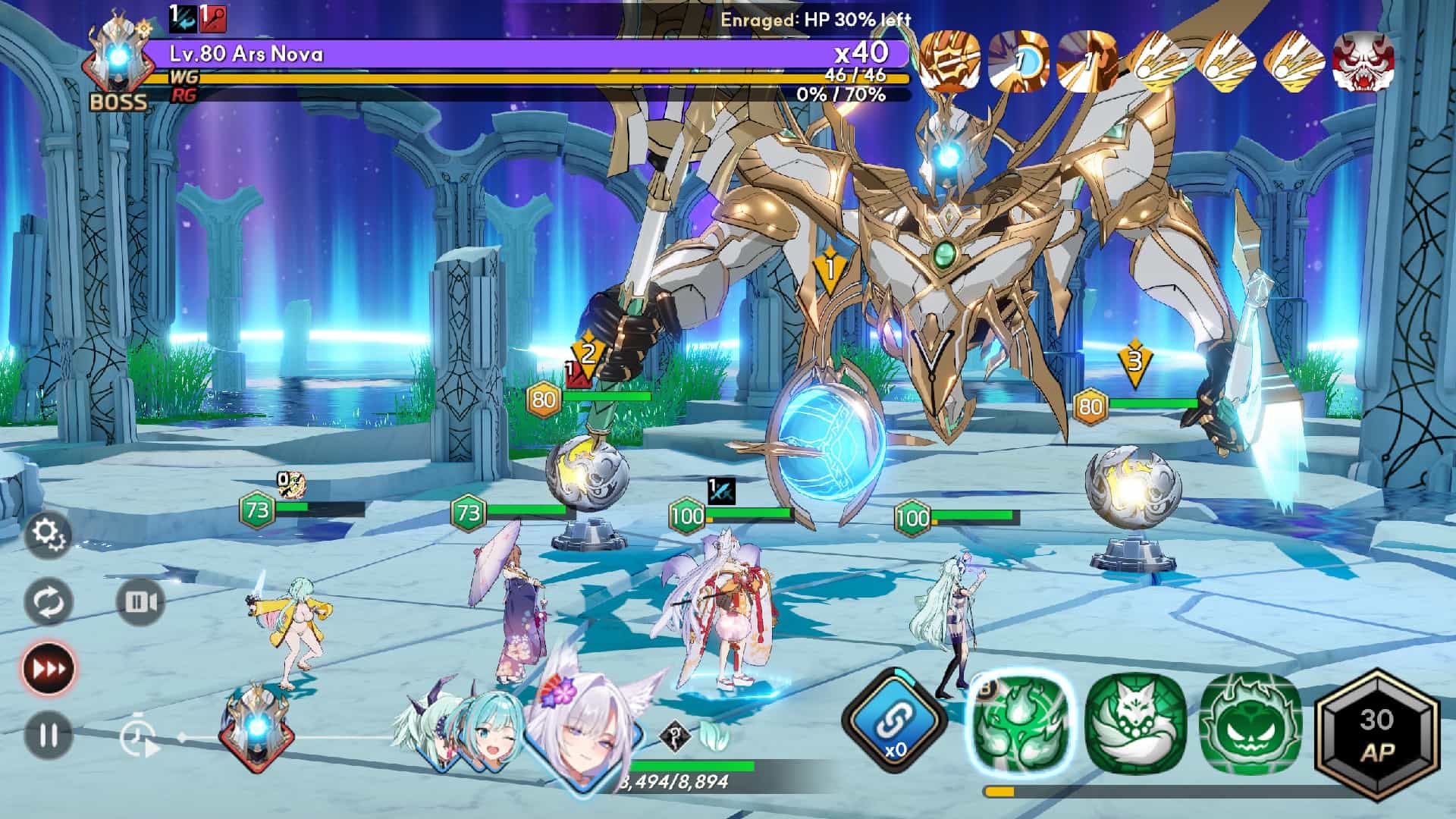
We're no longer in the old west of RPG games, where you don't know what you're going to fight until it's actually attacking you. It used to be a trial-and-error affair of sorts, where maybe you had a few visual cues to try and guess what you thought might be effective.
There's none of that in OUTERPLANE, since each mission gives you a heads-up about what to expect. With such useful information, why wouldn't you use it? The levels are literally telling you the type of foe, their element, their class, their stats, and even what skills they have.
When you know all that, coming up with the best team should be a fun little puzzle. If a stage is giving you trouble, consider whether you need more healing, a different damage type, stronger debuffs, better elemental coverage, or simply better timing before you resort to throwing more levels at the same four heroes.
6
Make Friends

There are many, many heroes in OUTERPLANE, and unless you're going the premium route (and even if you are), it's going to take you a long time to unlock them all. Some heroes are objectively stronger than others, able to do things and use skills that you wish you'd had all those boss battles ago.
However, thanks to the community, there is another way to support each other. By making friends, you can actually get them to lend you their heroes to help you out in eligible battles.
You may not have the ultimate Light healer to help you clear the dungeon and beat the guardian, but your buddy Terrence does, and you should ask politely for their assistance.
Besides helping you progress, borrowing unfamiliar heroes is also a handy way to see how they perform before you invest heavily in building or targeting them yourself.
7
Take Advantage of Seasonal Heroes

We can all be forgiven for sticking to the usual faces when setting up our teams but it really pays to take advantage of OUTERPLANE’s seasonal heroes; they’re regularly introduced, extremely powerful, and often become fan favourites.
It also has to be said that the game is fairly kind to new and returning players when it comes to recruiting new heroes. Rather than treating every new seasonal hero as a must-have, however, look at what each one actually adds to your account and whether they fill a role you're currently missing.
The current lineup of seasonal heroes includes:
- Summer Knight’s Dream Ember (Summer Event)
- Poolside Trickster Regina (Summer Event)
- Mystic Sage Ame (New Year Event)
- Kitsune of Eternity Tamamo-no-Mae (Halloween Event)
- Holy Night’s Blessing Dianne (Christmas Event)
- Heatwave Cop Delta (Christmas Event)
Out of the bunch, Mystic Sage Ame is generally considered one of the best PvE characters in the game. Her kit is packed with multi-turn attacks, fixed damage, and consistent debuffs, which basically translates to “making difficult content significantly less annoying.”
If you’re not sure who to aim for first, Ame is a very safe choice because she stays useful well beyond the early game and continues to perform in tougher late-game PvE content too.
Just remember to check which banners and events are actually available in-game before spending your summon currency, as seasonal availability changes over time.
8
Challenge Yourself

Okay, we all know how good it feels to tear through waves of enemies without a second thought and reap the rewards, but it doesn't take long to get antsy. It's nice to feel empowered, but we also like to earn our rewards through hard work and grit.
We want to feel like we overcame a difficult encounter through strategy and planning to reach that well-guarded treasure. You may have the strongest heroes in the universe, but do you know how to wield their power wisely?
Even the strongest can be brought down by the toughest enemies, and in a battle of attrition, the enemy tends to have the upper hand. This is why you must challenge yourself: to improve your skills, learn more about your heroes, and minimize how often you feel stumped.
With Outerplane now available on Steam and a renewed opening making it easier to step into the world, this is a great time to start building your team, exploring Mirsha, and finding your own approach to its battles. Follow the story, experiment often, and don't be afraid to change your strategy when a stage finally pushes back.