Gambonanza developer: "I'm no chess expert, that realisation didn't discourage me, it inspired me!"
Find out the inspirations behind the upcoming Balatro-like chess puzzler
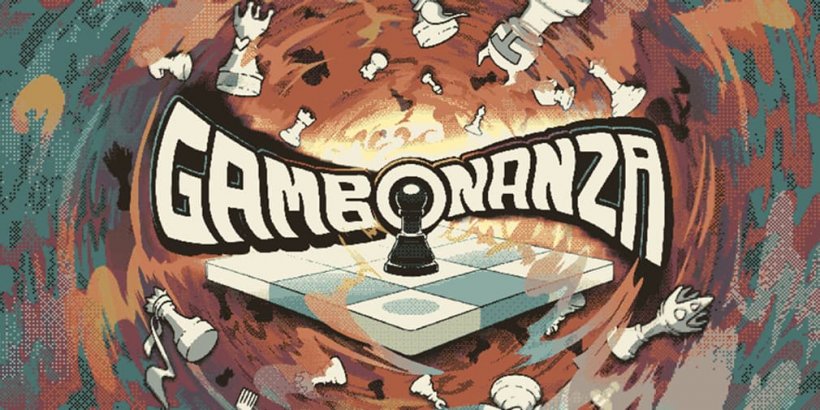
- Gambonanza, the upcoming chess roguelike, is coming to mobile in a few months
- And we got to put our questions to developer Blukulélé
- So, what inspired it, and what can you expect from Gambonanza on release? Let's find out!
With its funky soundtrack, funkier visuals and engrossing gameplay loop, it should be no surprise that Balatro has set a new precedent for the indie scene. Most interestingly, it's not just encouraging imitators, but those taking the lessons learned with LocalThunk's roguelike card battler and applying them to different formats and tabletop pastimes.
Cue Gambonanza, an upcoming chess-themed roguelike which sees you challenged by all manner of tricky puzzles while making use of Gambits, a mechanic that functions much like the jokers in Balatro. It looks set to do for chess what Balatro did for poker, but what's the actual story behind it?

Well, I got the chance to put just that question (and more) to developer Blukulélé in an exclusive interview! So dig in, read on and prepare your opening moves, but be warned, this is a marathon (and for good reason).
To start, Gambonanza is obviously inspired by your enthusiasm for chess, but it stands out by being so different. Why is that?I’ll start with an honest confession: I’m not a chess expert. In fact, while I deeply admire the game’s richness and elegance, I don’t naturally feel at home playing it.
When The Queen’s Gambit came out, I was completely captivated. Like many people, I downloaded chess.com and jumped into my first games. And I lost. A lot.
What fascinated me was the contrast: on screen, chess felt poetic, intense, almost cinematic. But when I played, I quickly realised how much of high-level chess is rooted in preparation, opening theory, and deep memorisation. The beauty I saw absolutely exists, but accessing it requires knowledge, discipline, and time!
And that realisation didn’t discourage me, it inspired me!
I didn’t want to simplify chess or challenge its greatness. I wanted to explore a different doorway into that same depth, one that feels immediate, dynamic, and expressive from the very first move!
So I began asking myself: what if we kept the elegance of chess, its movement rules, its clarity, its tactical DNA, but removed the rigid preparation layer? What if strategy could emerge from improvisation instead of memorisation? Gambonanza is my attempt to explore that question!
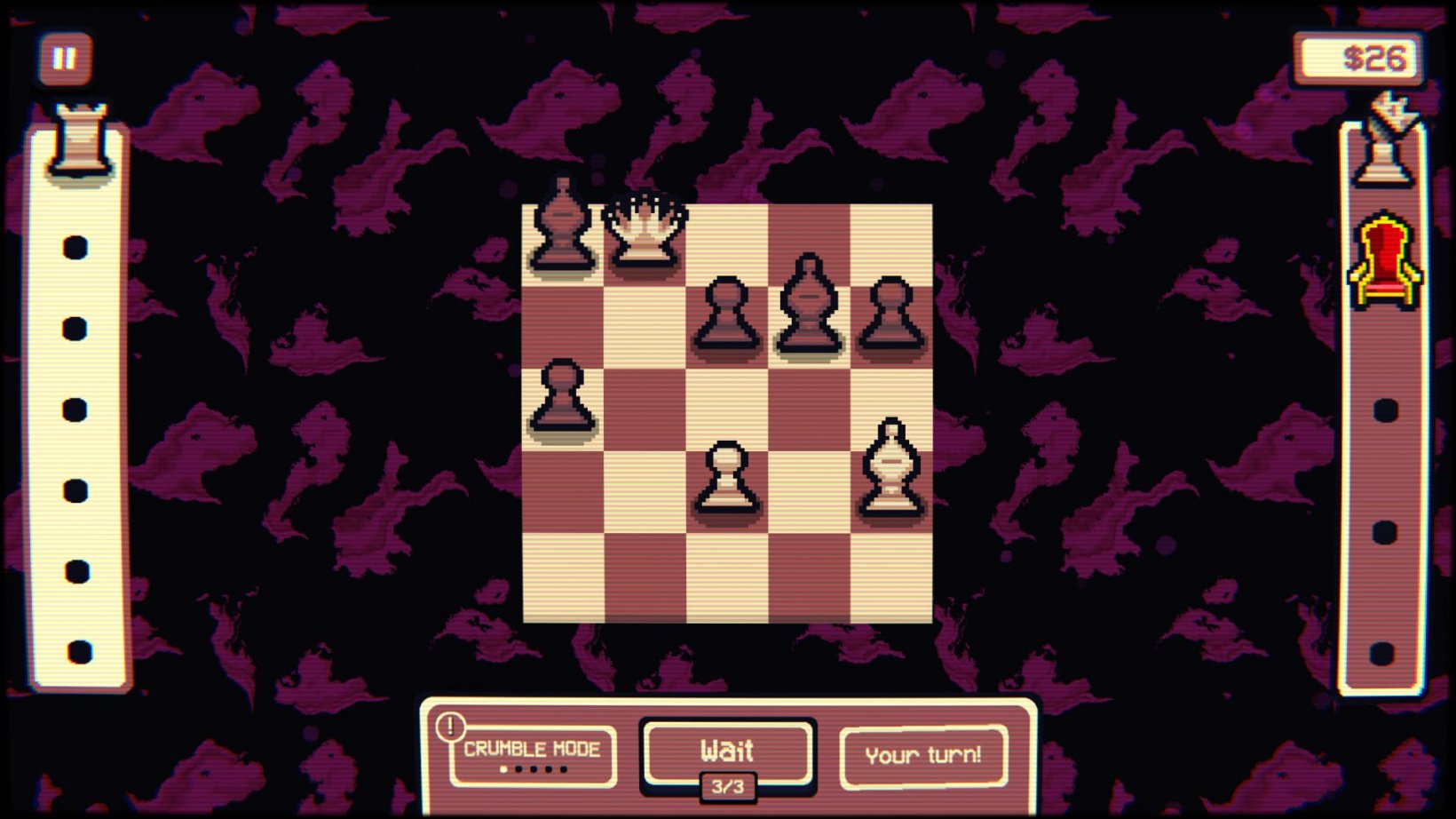
It’s a roguelike where classic chess movements become tools for experimentation. Every run begins with uncertainty and randomness, but from that chaos, players gradually build structure, discover patterns, and develop their own rhythm.
It’s not about replacing chess. It’s about reinterpreting its essence in a different emotional space, one where depth and spontaneity coexist!
So, can you walk us through how the actual idea came about and how you came up with the name? Was the Netflix show the only part?The initial spark definitely came from The Queen’s Gambit, but another major turning point was playing Balatro. It genuinely felt like a design revelation! It is the kind of game that makes you rethink systems, elegance, and how much depth can emerge from very simple rules interacting in surprising ways.
I was also inspired by Kindanice, one of the game devs who inspired me the most, who was experimenting with an auto-chess concept where you could merge chess pieces together. The idea of bending the rigidity of chess pieces into something more fluid really stayed with me!
All of this blended with my own background in hyper-casual mobile development, where clarity and accessibility are essential. I’ve always been drawn to stripping systems down to their core, making them readable, immediate, and intuitive without removing their depth.
At first, Gambonanza was extremely small in scope. A compact chess puzzle game on a tiny board: you win a fight, choose a new piece, and continue. Simple.
But during playtests, something interesting happened. Players naturally gravitated toward Queens, which makes perfect sense. In classical chess, the Queen embodies power and flexibility. The game slowly became about collecting as many Queens as possible. That wasn’t 'wrong', it was logical. But it revealed a design imbalance!
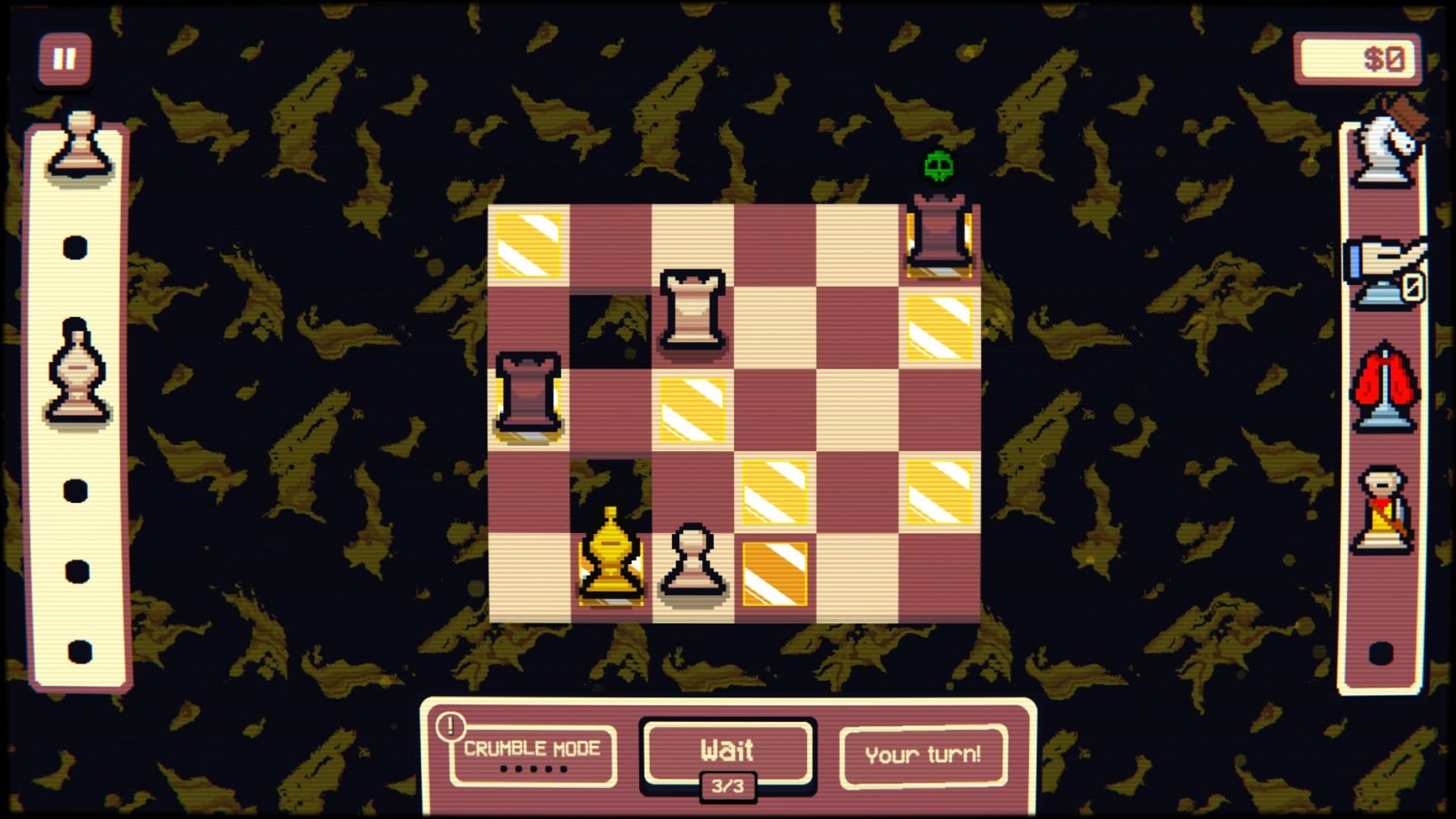
Instead of nerfing the Queen, I asked myself: what if every piece could feel just as exciting in its own way? What if pawns, knights, bishops, …, each had the potential to become something extraordinary?! That question led to the creation of Gambits.
Gambits became a way to reinterpret each piece’s identity, amplifying their personality rather than just their strength. From that point on, they weren’t just mechanics; they became the heart of the game’s expression! So naturally, they had to be part of the name.
Because Gambonanza embraces randomness, mini-games, and unpredictability, I wanted a title that stepped slightly away from traditional chess terminology. Something unusual. Something that feels like a strange board game you’d discover in an attic, a little mysterious, a little alive. Almost like Jumanji, a game with its own will!
“Gambonanza” emerged from mixing “Gambit” and “Bonanza.” The moment I heard it, I knew it was right!
Speaking of Balatro, in our initial conversation, the term 'design slap' came up regarding when you started playing. What exactly does that mean?I could genuinely talk about this for hours.
When I played Balatro, it felt like witnessing a shift in indie game design. The way LocalThunk approached systems, layering complexity while keeping everything readable, really challenged my own assumptions about accessibility.
I come from a background where I instinctively try to simplify everything. Strip it down. Make it minimal. Make it immediately understandable. And then Balatro arrived and showed me something different: you can build something dense, systemic, even slightly intimidating and still make it feel inviting.
What struck me most is the emotional curve. That sensation of “breaking” the game while actually mastering it. The snowball effect isn’t just mechanical, it’s visceral. When the system starts clicking and multiplying, it creates a rush that keeps you completely locked in! It’s clever, sharp design. Every element feels intentional!
Gambonanza would not exist in its current form without that shock. Balatro reminded me how powerful systemic experimentation can be.
I have immense respect for LocalThunk for daring to go that far with his vision and for Playstack for backing something so bold and uncompromising.
Going back to Gambits, what makes these stand out in comparison to say, Jokers, is that they're inspired by real-world chess play. Can you tell us more about that?Absolutely! As I mentioned earlier, I’m not someone who loves playing chess for hours. But I genuinely love listening to people who are deeply passionate about it.
When someone speaks about a subject with intensity and joy, I could listen endlessly. That’s exactly what happened when I discovered Julien Song (Content creator and international chess master). Through his videos, I wasn’t just learning moves, I was discovering a culture, a mindset, a way of thinking.
From there, I fell into a wider chess universe: Gartin59, Dina Belenkaya, GothamChess, Nemo Zhou, Ana Cramling and her family, … They all approach chess differently, but they share something powerful! A contagious enthusiasm that makes the game feel alive!
Referencing them in Gambonanza felt natural. It’s both a tribute and a quiet thank you. They helped me see a side of chess that goes beyond theory and memorisation, the human side, the creative side, the playful side!
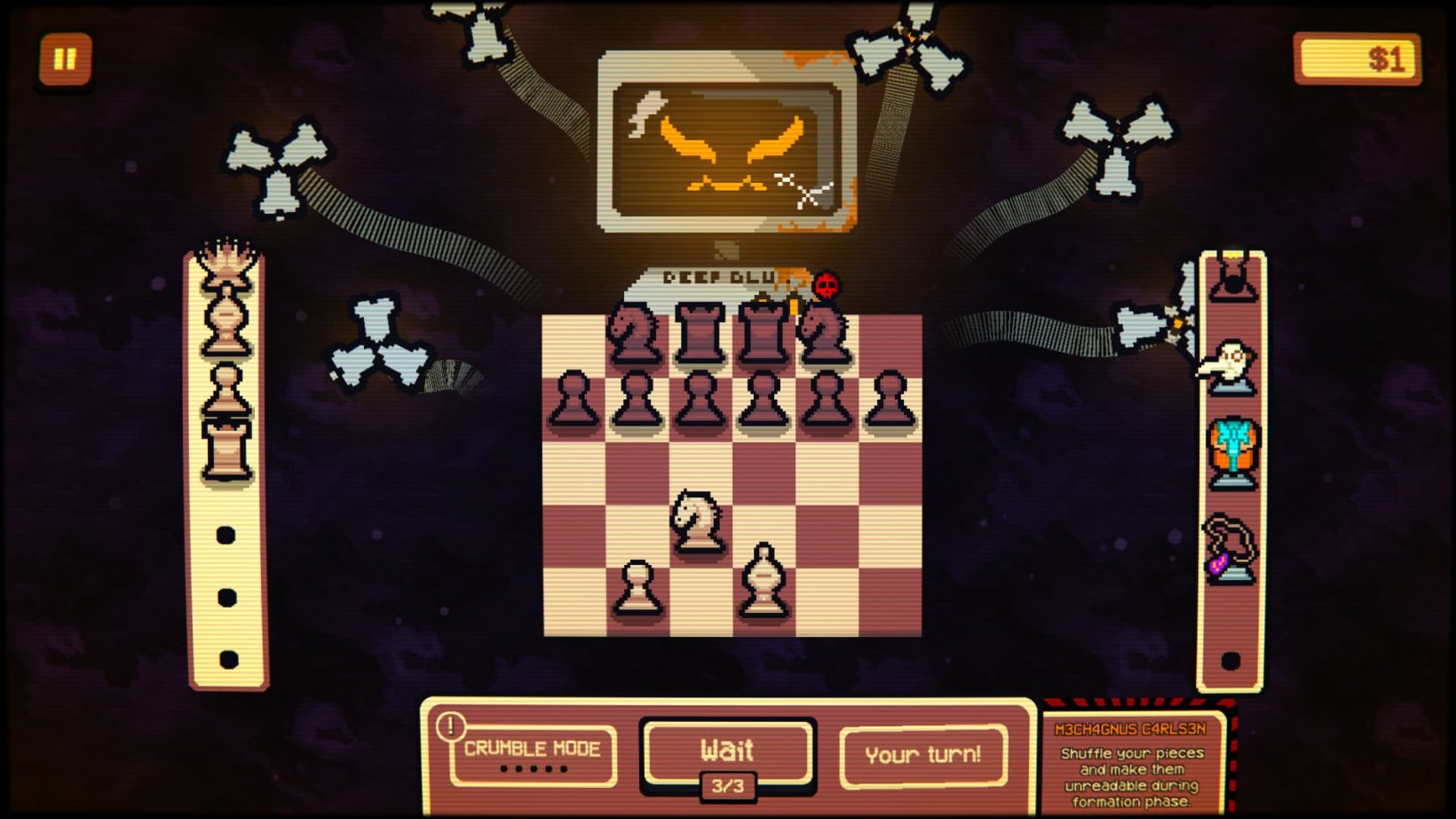
I don’t use real people directly in the game. Instead, I leave small nods. THE ROOOOK’s Gambit, Dina’s Gaze Gambit, or The Chinese Opening’s Gambit, little winks for those who might recognise them.
And for newcomers like me, maybe these references can become small doors, small invitations to discover the incredible passion these creators bring to the game!
How do you feel about the chess-like genre and games about tabletop classics with a twist, such as Gambonanza and Balatro, becoming so popular?As I mentioned before, I truly feel that LocalThunk sparked something important in indie games. Like a creative shockwave that opened new doors. And I love that!
To me, video games are not only a medium for entertainment or self-expression, they’re also a language. A living one. And when new ideas emerge, it’s like new words entering that language. New ways to say things. New ways to think about systems we thought we already understood.
Seeing tabletop classics being reinterpreted, twisted, reimagined is so exciting! It shows that nothing is ever completely fixed. Even something sacred or traditional can become a playground again.
What I find beautiful is this creative loop: one game inspires another, which inspires another. Everyone adds their own perspective, their own sensitivity. It becomes a conversation across developers and players!
For me, that’s fascinating. And I’m genuinely happy to see this movement growing and evolving!
You're going to be releasing Gambonanza on mobile and PC. How do you plan on managing and integrating feedback from players across multiple platforms?I won’t lie, it’s a real challenge!
But it’s also exactly why I’m working with Stray Fawn, Sidekick, and Ateo. Beyond their undeniable skills, they’re genuinely thoughtful, kind, and deeply committed people. I couldn’t have dreamed of a better team to bring Gambo to life.
For me, community is not a marketing tool; it’s part of the creative process. I don’t have absolute truth as a designer. Playtests are essential because they help me refine my vision and shape it into something that truly feels good to play.
Today, we have a Discord with over 10,000 members where players openly share feedback, ideas, frustrations, discoveries. I read everything carefully. Maybe I can’t answer everyone instantly, but I pay close attention!
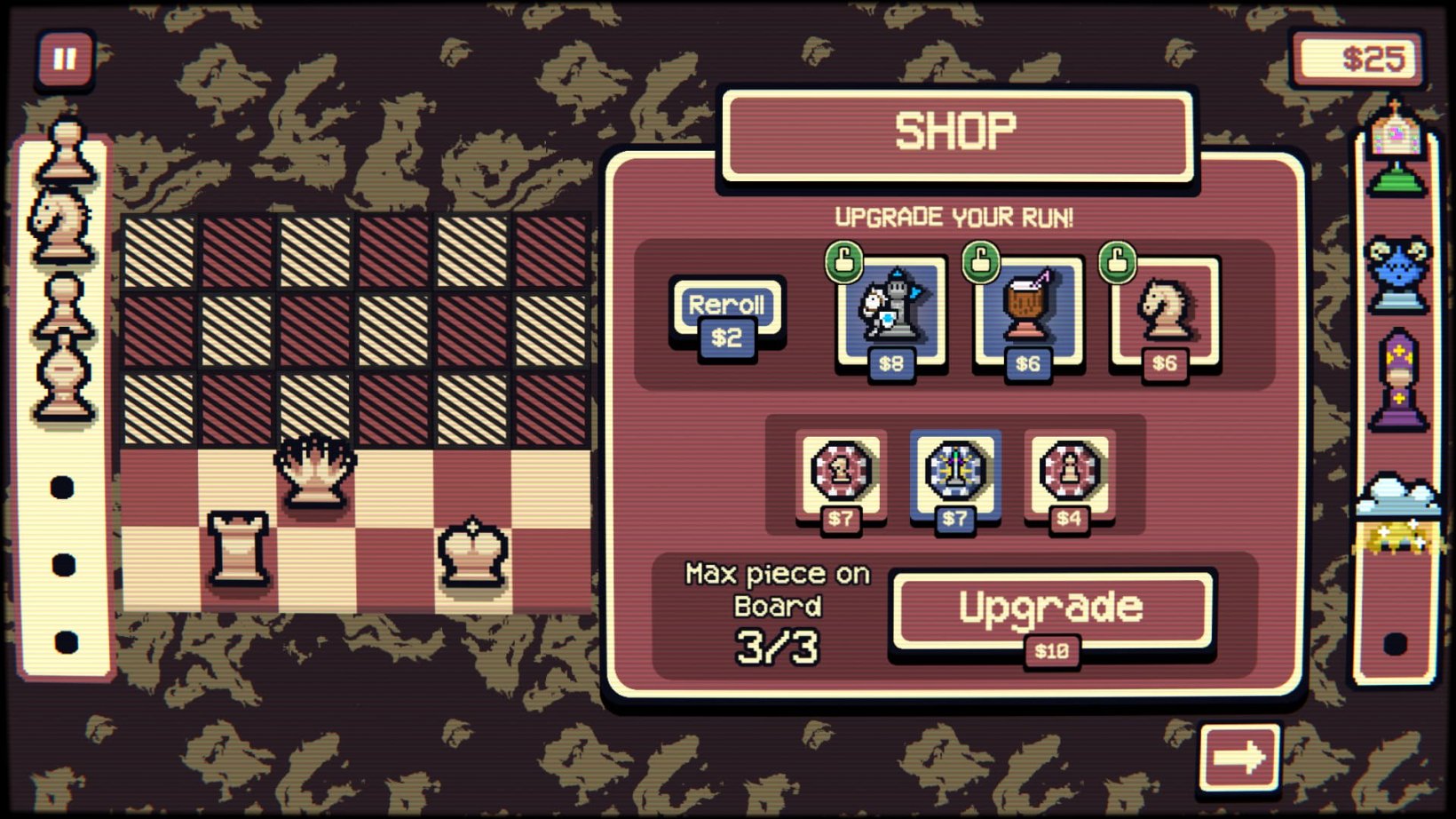
My process is very organic: I read, I implement, I release an update, I observe reactions, I adjust. It’s a constant dialogue.
At the same time, I do have a clear direction for Gambonanza. Listening doesn’t mean losing your vision, it means sharpening it. Players are the ones who will live with the game, so their experience matters deeply to me.
And honestly, I love that dynamic. It makes the game feel alive!
What made you bring Gambonanza to mobile at the same time as launching it for PC?I’ll be honest, part of it is probably because I love challenges a little too much. Doing one launch wasn’t complicated enough, apparently!
But more seriously, bringing Gambonanza to mobile felt quite natural.
I spent three years developing mobile games at the beginning of my career. That’s where I learned how to design systems that are readable, tactile, and immediate. Even when I build for PC, I instinctively think about clarity, touch, flow. It’s just part of how I design now.
So from early on, Gambo had that DNA. It wasn’t forced onto mobile later; it already lived comfortably in that space.
When Stray Fawn, after their experience with Dungeon Clawler on mobile, saw the game and immediately felt the same potential, it didn’t feel like “let’s chase another market.” It felt like: yes, this makes sense.
And I would never have said yes if I didn’t believe the mobile version could stand on its own. I’m surrounded by incredibly talented people at Ateo who truly understand the platform. That gave me confidence that we could adapt the experience properly!
For mobile players specifically, what do you think will make Gambonanza stand out to them and get them playing?What excites me the most is that Gambonanza fits incredibly well into short, intense play sessions. That feeling of a sharp, explosive confrontation. Two minds clashing. Fast. Focused. Dramatic! And to me, mobile captures that feeling beautifully.
You can jump into a run during a commute, play a few decisive turns, pause instantly, and come back later. It supports concentrated bursts of tension. It feels like stepping into a duel, even if it only lasts ten minutes.
Many people I’ve spoken to already play chess daily on their phones. That’s their entry point. So offering them a chaotic, expressive roguelike twist on something familiar feels natural. What I hope stands out is the emotional spike. That moment when a combination clicks. When the perfect gambit appears, turning chaos into strategy!

With Gambonanza, I want players to feel clever. Surprised. Slightly overwhelmed in a good way! Bringing it to mobile is about delivering that intense duel fantasy in a format that genuinely supports it.
It made sense to me creatively, so I hope it feels just as fun and alive in players’ hands as it does in mine!
Gambonanza is set to arrive on mobile for iOS and Android on May 1st, with pre-registration now open.