Gambonanza beginner's guide - 7 tips for getting started with this chess-themed Balatro-like
Want to skip the confusion? Check out our Gambonanza beginner's guide for getting started to keep the frustration at bay.
- Gambonanza is a new chess-themed roguelike inspired by Balatro
- There's a lot to digest here; fortunately, we've already done much of the legwork
- Read on to find out my personal top tips for getting started!
Ahhh, Gambonanza. A Balatro-like by any other name would be just as sweet. But as you've probably seen in my review, this grinds my gears as much as it excites me. However, in the time that I've put in, I think I'm starting to 'get' what Gambonanza is all about. And, if you're interested, hopefully I'll be able to spare you some of the early frustration that I suffered.
Gambonanza is a complex twist on the roguelike deckbuilder genre. But instead of poker or card battles, you're playing chess, with the ability to use special 'Gambits' taking the place of Jokers, and the addition of Tiles that change certain spaces on the board with special effects.
It can be a complicated and often mystifying experience, even to those experienced with chess. And if you're a total newbie, you'll feel even more confused. But all is not lost, so read on and find out some of the top tips & tricks that I've come up with to help you out!

Gambonanza beginner's guide
Now, I'll preface this only by saying that I'm no expert, but I've managed to get a good ways in, so I think I can safely let you know where I found some pitfalls and what I did to adapt to them as a beginner, not to mention explaining some key chess concepts along the way. And as always, just because I suggest these doesn't mean they'll work for you, so don't be afraid to experiment (especially with the Gambits and Tiles portion).So, without further ado, let's get into it...
1
Tip # 1: Build up your Stock of Pieces
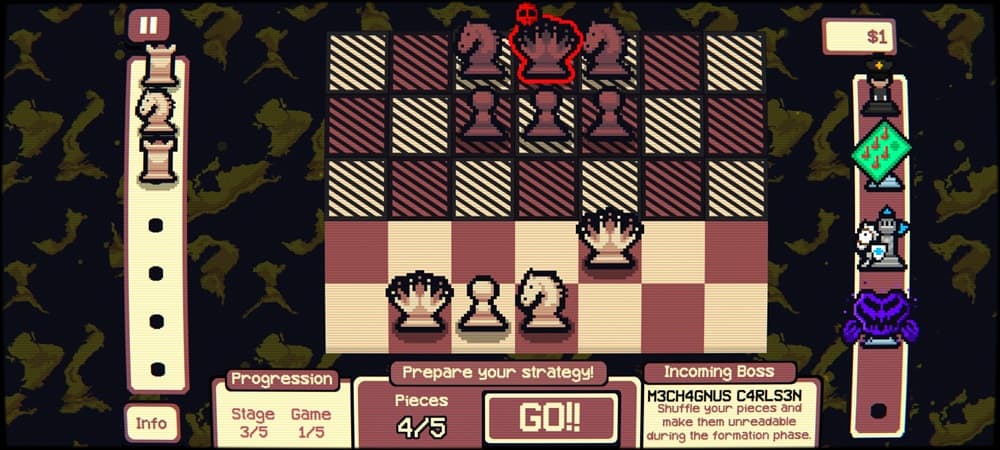
One of the big mistakes I was making upon initially starting Gambonanza was trying to pick from the three different upgrade paths. But having a variety of Tiles and Gambits means nothing when all you have to your name is a pawn and a rook. The early game is where you have the time and space to pick as many pieces as possible, which makes risky plays a little easier to absorb. So try to pick a variety of pieces to fill up your stock, or Gambits that will reliably keep you in the green when it comes to numbers, such as the Lemmong's Gambit that continuously restocks your pawns.
2
Tip # 2: Be ready to make sacrifices
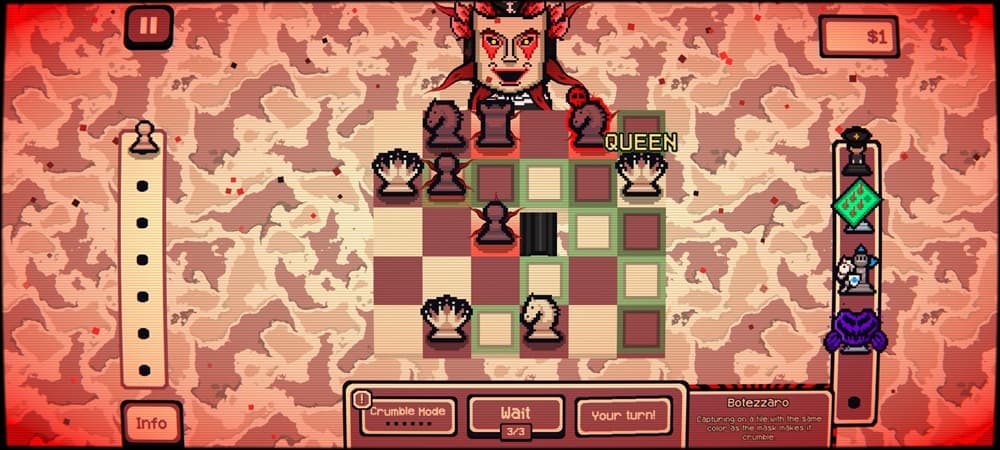
Another important concept in chess is the idea of a trade. Basically, there's no way to win (unless you're an exceptional player) without losing some of your own pieces. So, instead of trying to avoid ever being captured, you should always aim to make favourable trades. A knight jumps out to take a pawn, and then you use another pawn to take that knight, for example. Yes, you're even in terms of actual pieces, but the lost knight reduces the overall mobility of the other player's side.
The same is true in this Gambonanza beginner's guide. Often, you'll be faced with setups that basically demand you either play flawlessly or leave a sacrificial piece out. But doing so means you'll then be able to take another, more powerful piece. That sort of planning is key to success, and speaking of…
3
Tip # 3: Make your plans
Another important thing you learn in chess is the concept of long-term strategy. The term 'being two steps ahead' is drawn from this, after all. Think about not just whether you can take a piece, but whether your opponent can then take yours, how you'll react to that and so on and so forth. If you don't notice that their bishop can skip to your backline and take all your most manoeuvrable pieces, it doesn't take a genius to exploit that opening. At the same time, if you're at all experienced with chess, you'll find that the AI isn't a grandmaster-level player. And it seems that it's set to move pieces into a capture position even if that will end the game, so don't fret too much about a stalemate (even if that's still possible in boss battles).
4
Tip # 4: Skip a few turns
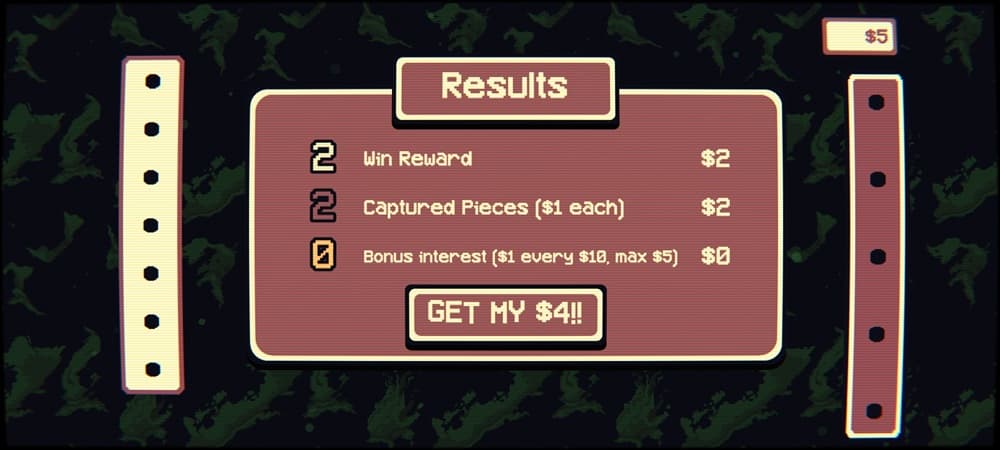
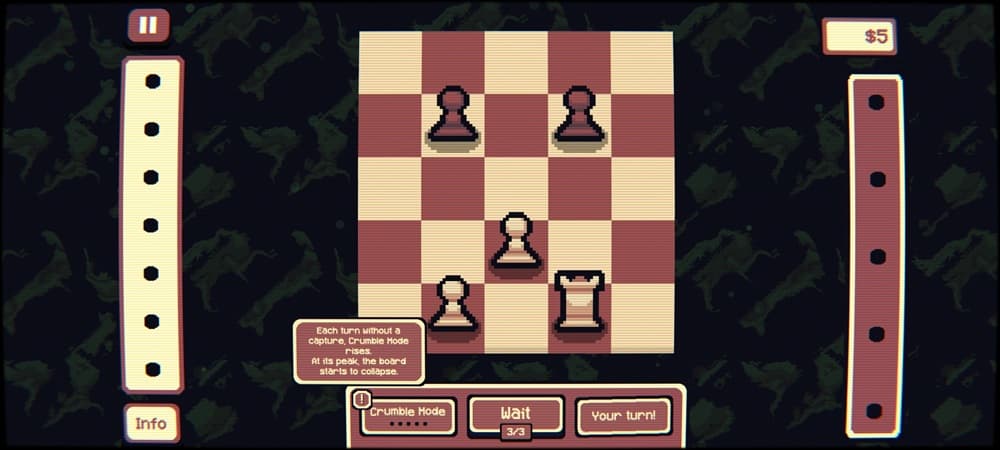
Being able to skip your turn in Gambonanaza is enormously powerful. In normal chess, you have to make a move on your turn without exception. But by waiting, you force the AI to make a move and often put themselves in a worse situation. You can even do this three gosh-darn times. Just don't become reliant on it, because waiting also speeds you towards the start of crumble mode, where the board literally begins to fall away, and those precious pieces you've been protecting will disappear. Also, think about whether you can do something else other than move, such as landing a piece, which still forces the other player to move but lets you add to your forces on the board.
5
Tip # 5: Keep an eye on the entire board
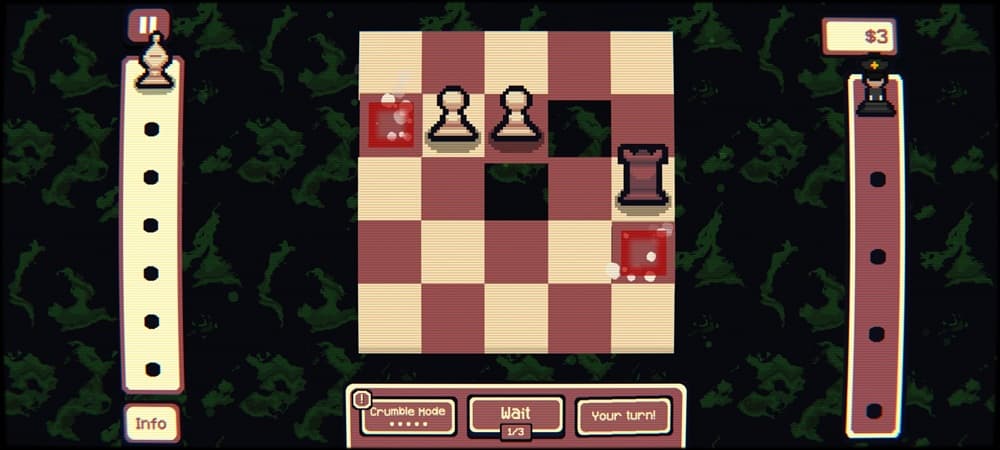
It may seem obvious, but paying attention to the whole board and not getting blindsided is an important skill in chess. And focusing on moving one piece into that perfect position means you can miss a sneaky pawn or bishop, or in the case of Gambonanza, not notice your precious knight is on a crumbling tile. Try to keep your eyes open, and you'll be surprised by what you notice. And if you need a few pointers, then be sure to…
6
Tip # 6: Check capture zones
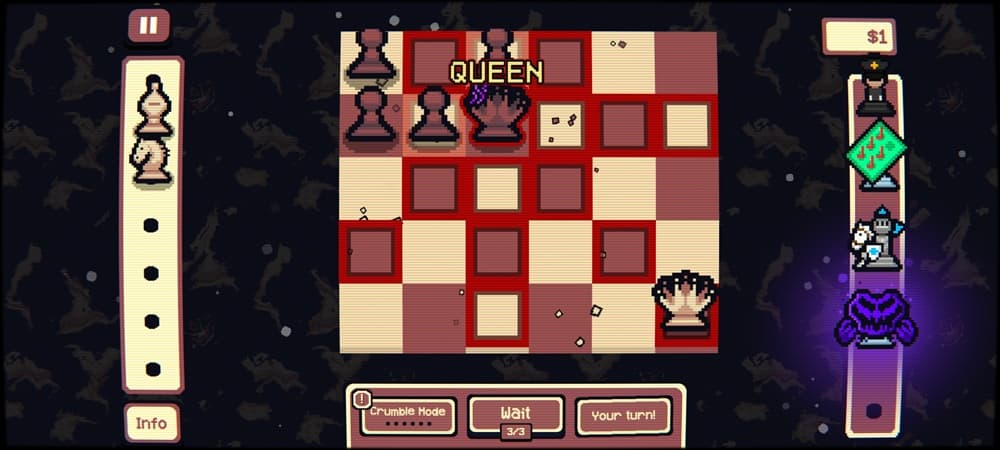
Another useful tool, familiar to players of Chess.com, is the ability to check an enemy's capture zone by tapping on it. If you're a beginner who's unfamiliar with where pieces move, this can help you keep up with what a knight can and can't do, or what spaces a bishop has line of sight to. It also tells you what special effects are on a piece and what abilities that gives them. Given the changing size of the board, it can often throw off an experienced chess player's usual muscle memory, so checking where a piece can capture is always wise.
7
Tip # 7: Pick one path for upgrades (and stick to them)
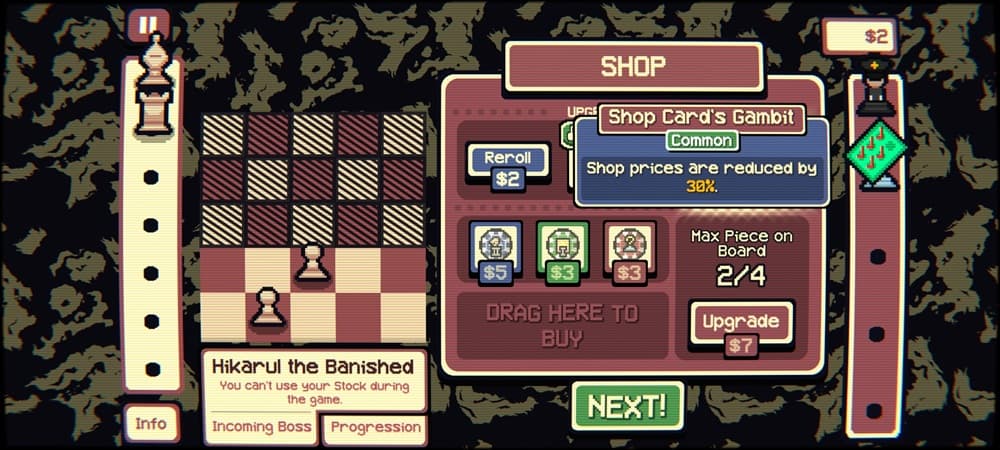
One of the things that needled me initially was the three upgrade paths. Acquiring pieces, new Tiles, and Gambits. But, intentional or not, I've found piecing two paths is practical. One of these should be acquiring new pieces, while the other can be either Tiles or Gambits. But, in my opinion, not both. You'll always need pieces, after all, but unless you pull some lucky Gambits early on, you won't have the cash to consistently pick. Once you get into the later game, you can afford to pick more of both, because many of these Tiles and Gambits focus on a specific strategy you'll need space, time and material to take advantage of.
And those're my top tips! As always, take this Gambonanza beginner's guide with a grain of salt. But overall, you should remember that at least some experience with chess will help massively. Learning what pieces do, where they can move and how to bait out the AI effectively will do just as much (if not more) to carry you through as a powerful Gambit will.


